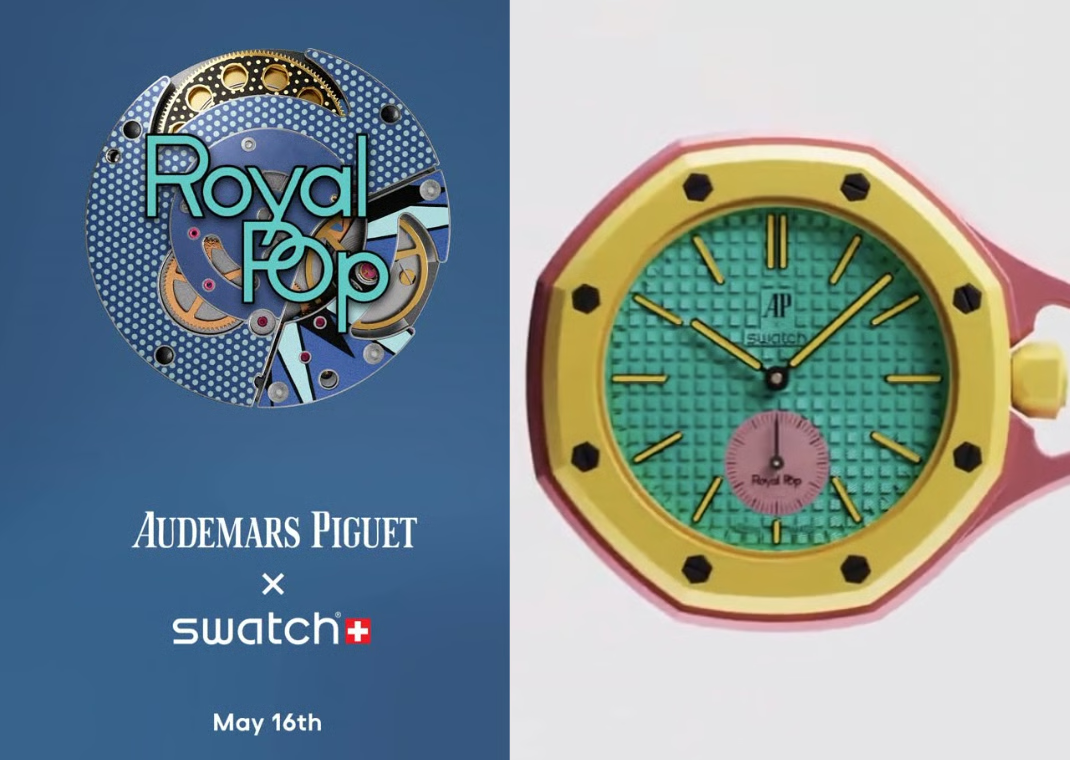
Every so often, the watch calendar concentrates. A few strong releases cluster together, the internet runs hot for about seventy-two hours, and then the new reality sets in — these watches exist now. May 2026 was one of those months. It had a viral moment, a long-overdue complication, a gold statement from Japan, a resurrection from Paris, a titanium take on a legend, and a dozen other things happening underneath the headlines. Here are the ten that mattered most.
1. Audemars Piguet × Swatch Royal Pop
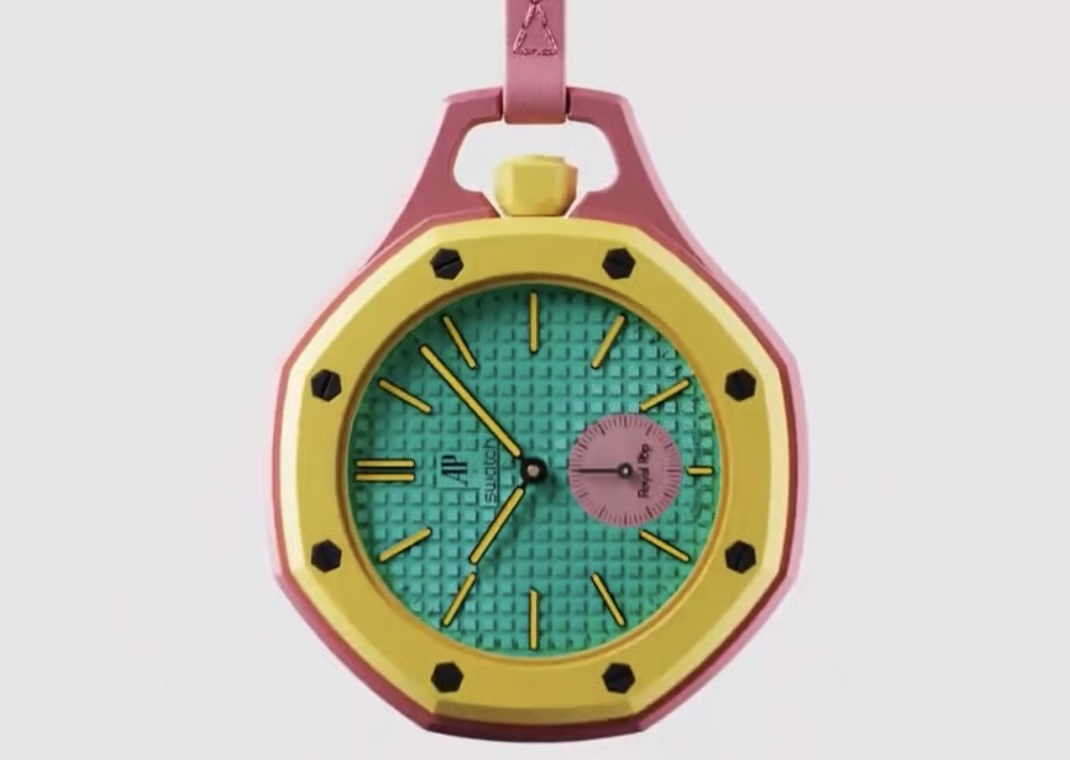
There is exactly one collaboration in the last decade that can legitimately claim to have changed the way people queue outside stores before sunrise, and it launched in 2022. The Royal Pop, announced in early May and available on May 16, is what happens when the same formula gets applied to a completely different format — and the result is stranger, more interesting, and more historically grounded than it has any right to be.
It is a pocket watch. Forty millimeters across, made from Swatch's Bioceramic material, shaped like an octagon. Eight hexagonal screws on the bezel. Petite Tapisserie guilloche on the dial. Inside, a hand-wound variant of the SISTEM51 caliber that was developed specifically for this project and delivers over 90 hours of power reserve. The case references the AP Ref. 5692 — the original Royal Oak pocket watch, produced between 1980 and 1985, in the exact years Swatch was busy disrupting the same industry in which AP was operating as a cathedral.
Eight colorways, each named with the word "eight" in a different language — a nod to the octagon, to the screws, to Genta's original geometry. Prices sit at $400 for the Lépine configuration and $420 for the Savonnette. In-store only, one per person per store per day.
The Royal Pop broke the internet not because it was the most technically impressive watch of the month, but because it was the most culturally precise. Swatch's genius with these collaborations has never been the watch. It's the arbitrage of meaning.
Read more: Audemars Piguet x Swatch Royal Pop — Full Breakdown
Official page: swatch.com — Royal Pop Collection
2. Tudor Black Bay 58 GMT [Ref. M7939G1A0NRU]
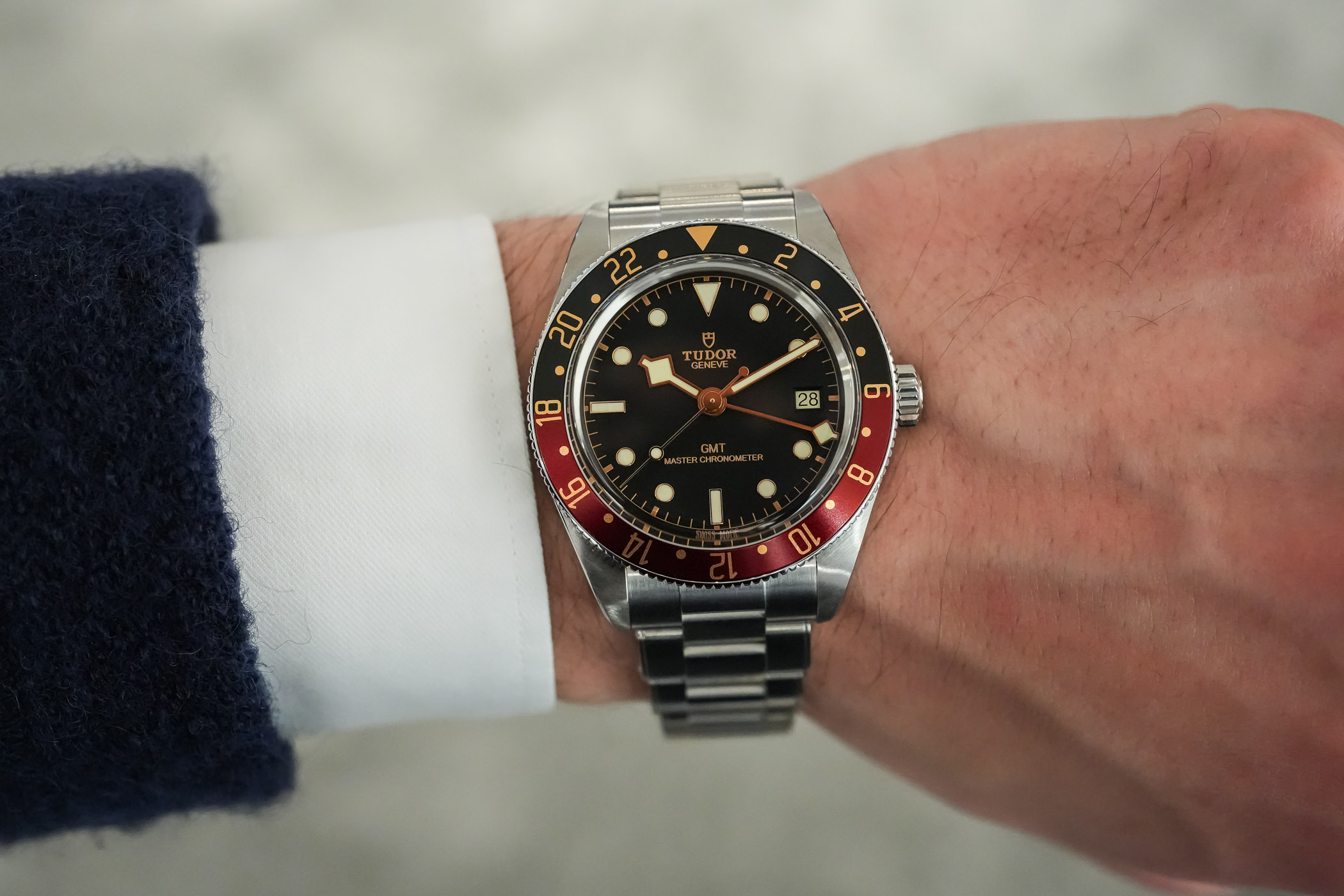
The Black Bay 58 GMT has been a logical conclusion waiting to happen for several years now. The 39mm case size was always the right call for a travel watch — the original Submariner references that anchor the BB58's proportions were built in an era when GMT complications and 39mm cases were understood to coexist naturally. It just took Tudor some time to connect the dots.
The result is the M7939G1A0NRU, and it is worth the wait. The GMT hand is rendered in red — a deliberate reference to the long history of contrasting GMT hands on aviation-era pilots' watches — and reads against a matte black dial with the kind of depth that Tudor dials at this price level have consistently managed to achieve. The bezel is bidirectional and marked for both directions of time zone reference, as a proper GMT bezel should be.
What makes the BB58 GMT more interesting than a straightforward complication addition is the proportioning. Most travel watches live in 41mm cases and above, which means they wear with a certain purposefulness — you know you have a tool on your wrist. The BB58 GMT at 39mm and 12.8mm thick is a different proposition: a GMT complication that genuinely disappears under a shirt cuff, that is appropriate at dinner the same night as it is on an early morning flight. The sweet spot that enthusiasts have been requesting since the BB58 launched in 2018 is finally here.
Official page: tudorwatch.com — Black Bay 58 GMT
3. Omega Seamaster Diver 300M Chronograph "007 First Light"
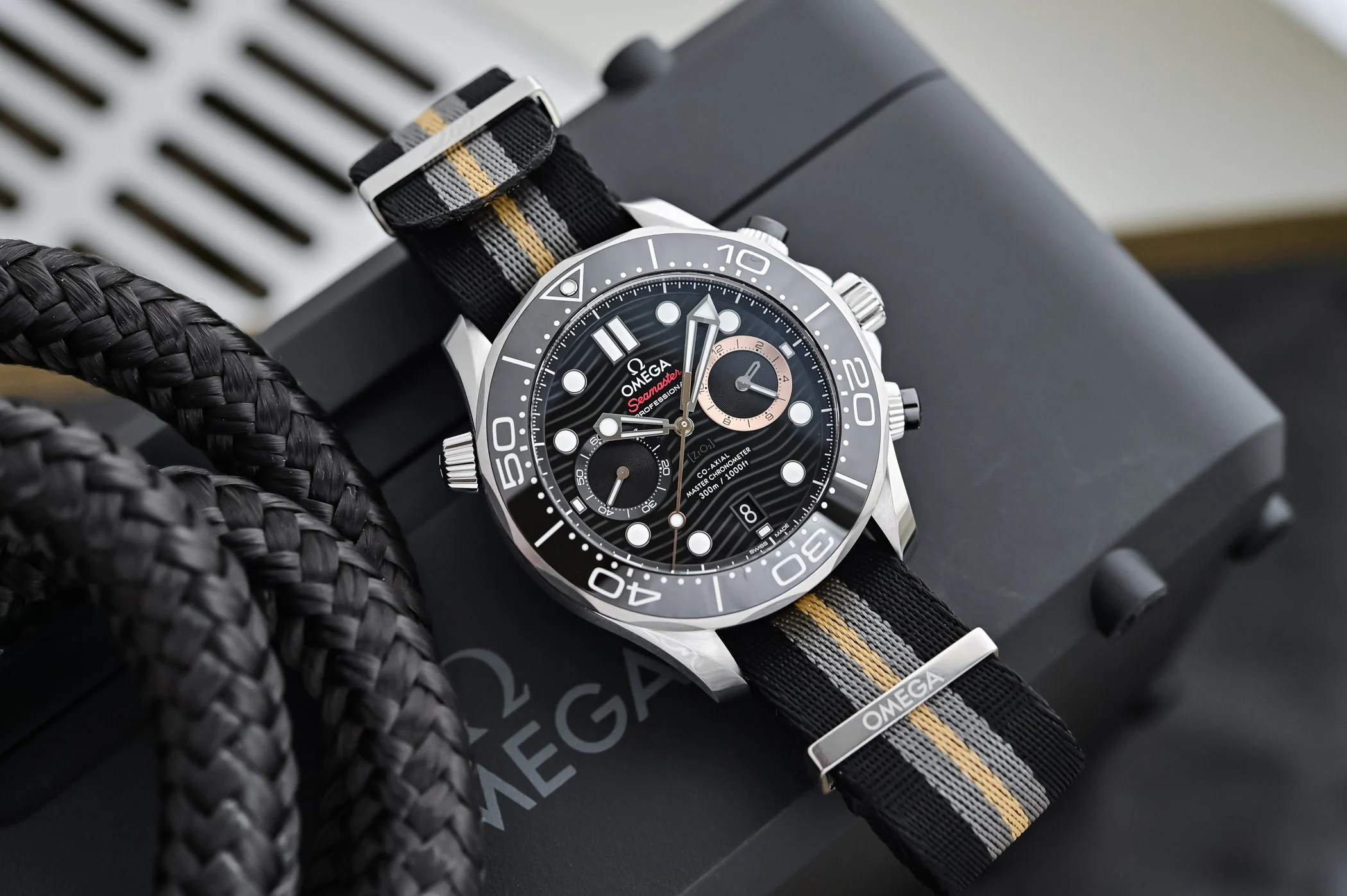
The James Bond connection to Omega is old enough to have its own archaeology. The first Bond–Omega tie-in dates to 1995 and GoldenEye, and the relationship has been consistent enough since then that "Bond watch" and "Seamaster" have become nearly synonymous in the mainstream. But Bond tie-ins require Bond films, and theatrical release schedules are unpredictable. What Omega's "First Light" edition demonstrates is that the franchise has learned to expand the definition of Bond content — this piece references the video game rather than a cinematic release, targeting a generation of 007 fans who may have experienced Bond with a controller in hand before they encountered him on a cinema screen.
The watch itself is a legitimate instrument. The Seamaster Diver 300M Chronograph is a properly serious dive-certified chronograph: 300-meter water resistance, helical helium escape valve, column-wheel co-axial movement, 44mm steel case with a black ceramic dial and a NATO strap in Bond's signature black-grey-beige palette. The "First Light" treatment adds a specific colorway — including PVD bronze-gold accents on the sub-dial ring and seconds hand — without doing so in a way that dates the watch to a specific moment.
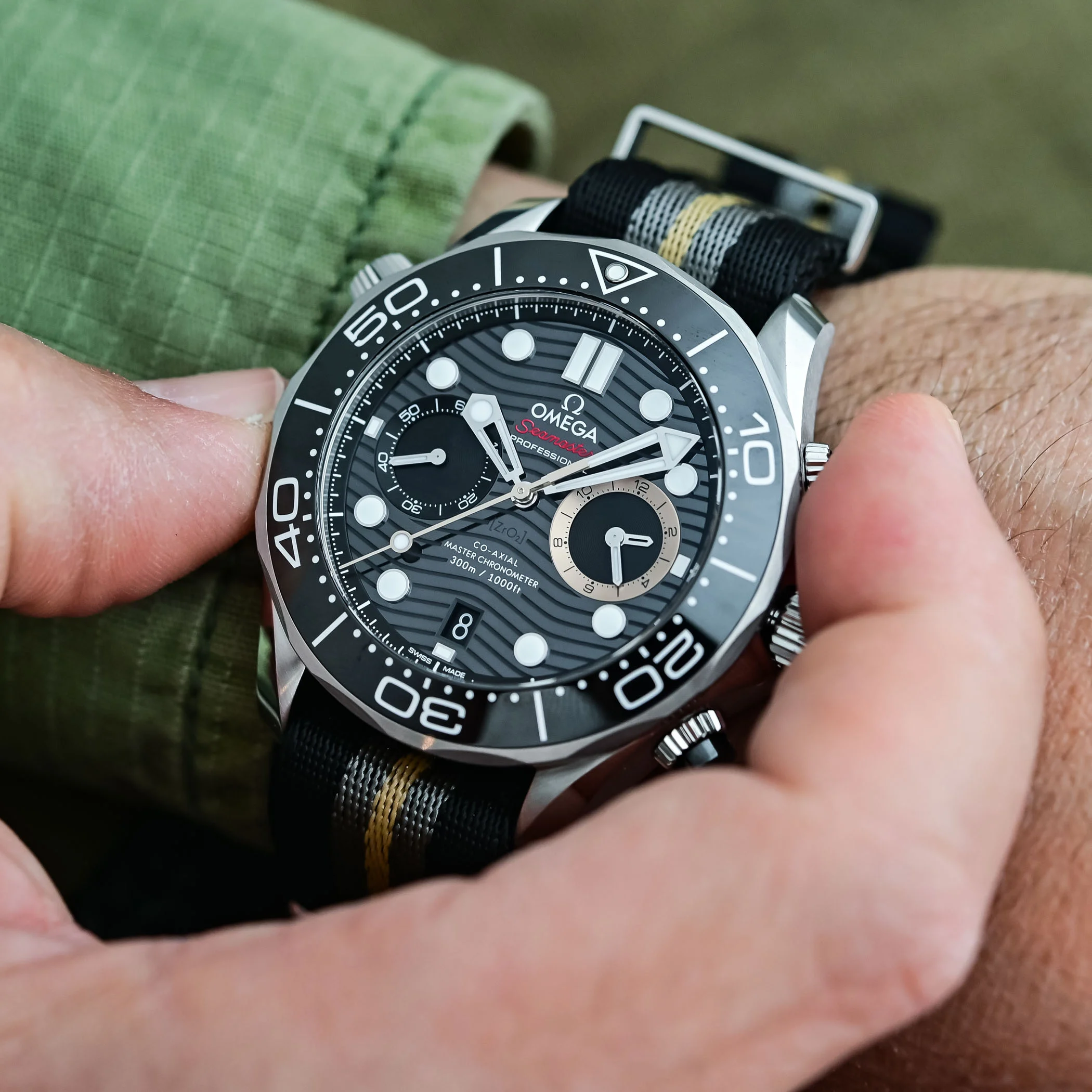
At a category where Bond editions have occasionally leaned on prestige without delivering equivalent horological substance, this one earns its reference points. Price: $9,400.
Official page: omegawatches.com — Seamaster 007 First Light
4. Grand Seiko SLGB006 "U.F.A." — Ice Forest at Dawn
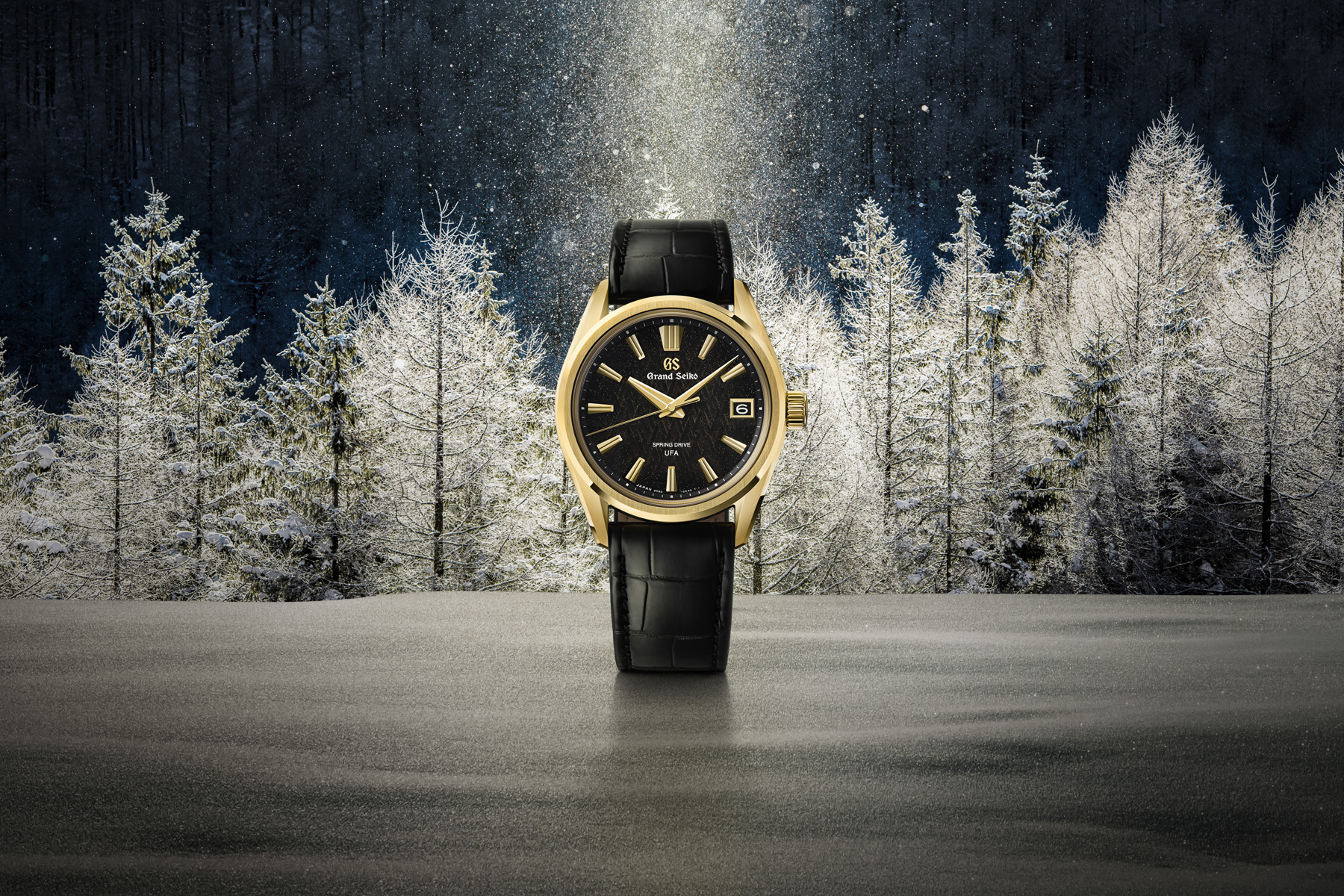
Grand Seiko's move into precious metal territory has been one of the more deliberate strategic shifts in Japanese watchmaking over the last five years. The brand built its reputation on the quality of its finishing — the Zaratsu polishing, the hand-applied surface work that produces reflections and contrasts at a level that many Swiss manufacturers at double the price struggle to match — and it is now making the argument that this finishing tradition belongs on cases made from yellow gold as confidently as it belongs on steel.
The SLGB006 "U.F.A." makes that argument loudly. The 37mm case is crafted in 18k yellow gold — a first for the Evolution 9 collection — and houses the new Calibre 9RB2 Spring Drive U.F.A. movement, which achieves an unprecedented ±20 seconds per year. The "Ice Forest at Dawn" dial is inspired by the ice-covered larch trees of the Kirigamine Highlands in winter: a black ground adorned with tiny golden flakes in varying sizes, catching light like a starry night. Eighty pieces worldwide.
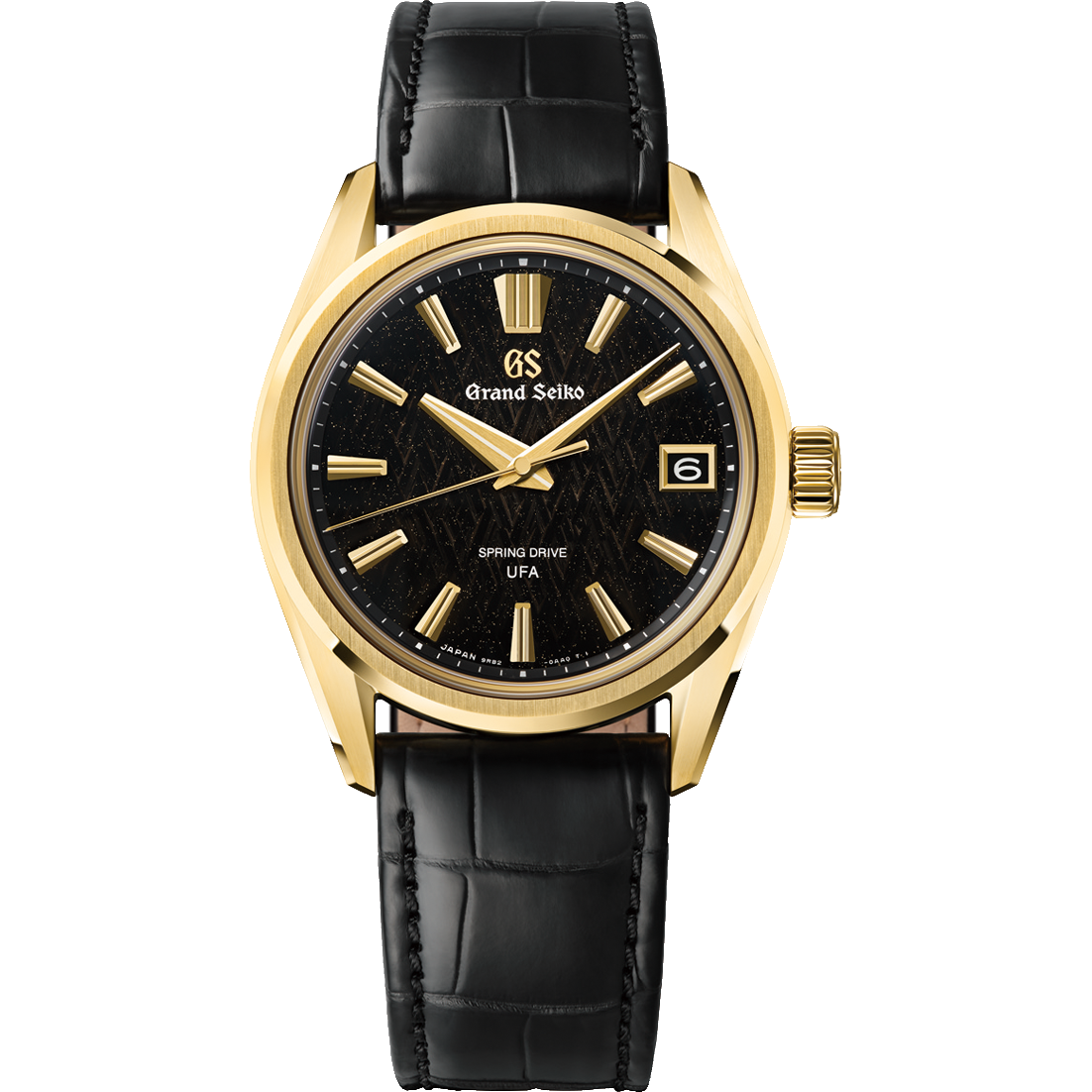
Whether the market will fully embrace Grand Seiko at this price point and in this format is still being tested. But at EUR 44,700 for 80 pieces, the SLGB006 is a clear statement that the testing is intentional and the long game is being played seriously.
Official page: grand-seiko.com — SLGB006
5. IWC Pilot's Watch Mark XX Le Petit Prince in 18k Rose Gold [IW328301]
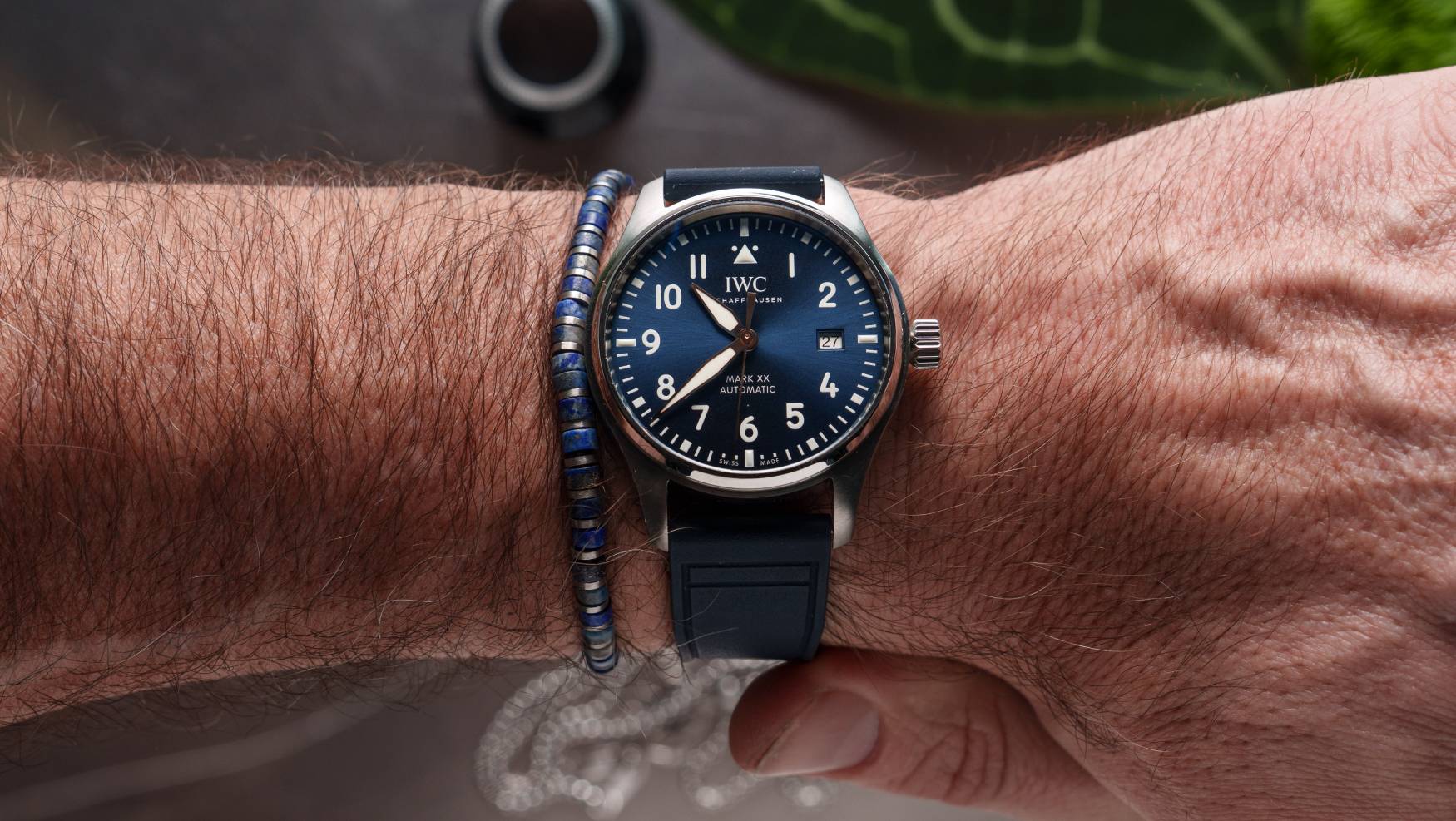
The Pilot's Watch Mark line has been one of IWC's most consistent performers for a simple reason: it is a clean, legible, formally conservative watch that does not require expertise to appreciate. You do not need to know anything about IWC's history, about aviation timing, about the Pellaton winding system, to look at a Mark XX and understand what you are looking at. It reads. That accessibility, combined with IWC's reputation for build quality, has kept the Mark series in print through several design eras and market cycles.
The Le Petit Prince editions — named for the Antoine de Saint-Exupéry novella, in tribute to the author's background as an aviator — have traditionally lived in steel. Moving that specific aesthetic to an 18k 5N rose gold case marks the 20th anniversary of the Le Petit Prince collection, and it is not a small decision. The sunray blue dial, which is the Le Petit Prince's signature, gains new warmth against the rose gold case — the cool blue and warm gold read together in a way that the dial and a steel case, however elegant, does not quite achieve. Applied indexes and hands crafted from solid 18-carat 5N gold complete the picture.
This is IWC signaling that the Mark line can carry a different kind of weight — a watch bought for a specific life moment rather than for daily use. Price: $22,500.
Official page: iwc.com — Pilot's Watch Mark XX Le Petit Prince IW328301
6. TAG Heuer Monaco Chronograph Titanium [Ref. CDW2180.FC8360]
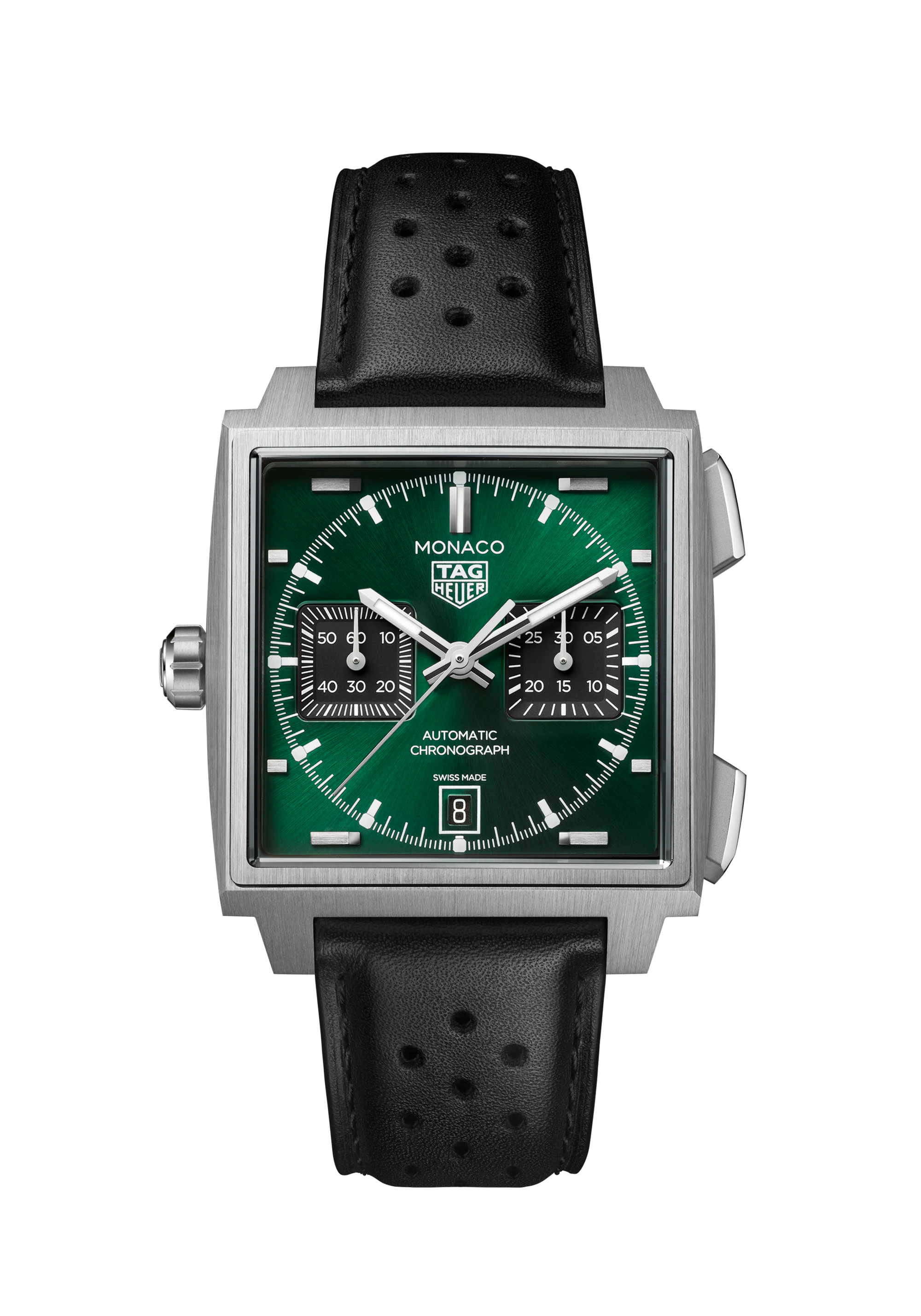
The Monaco's problem has always been the same problem that makes it interesting: it is a large, square watch worn on a round wrist. The CDW2180 in Grade 5 titanium is TAG Heuer's most direct attempt to address the wearability issue without abandoning the shape that has defined the Monaco since Jack Heuer and Jo Siffert put it on racing drivers' wrists in 1969.
Titanium does two things here. It reduces the weight substantially — Grade 5 titanium is roughly forty percent lighter than steel at equivalent volume — which changes the on-wrist experience of wearing a watch with this case geometry more than almost any other modification could. It also produces a surface treatment that responds to brushing differently than steel does, giving the Monaco a more matte, tool-adjacent character that suits the racing heritage more credibly than the more formal steel. The case measures 39mm and sits 13.9mm thick.
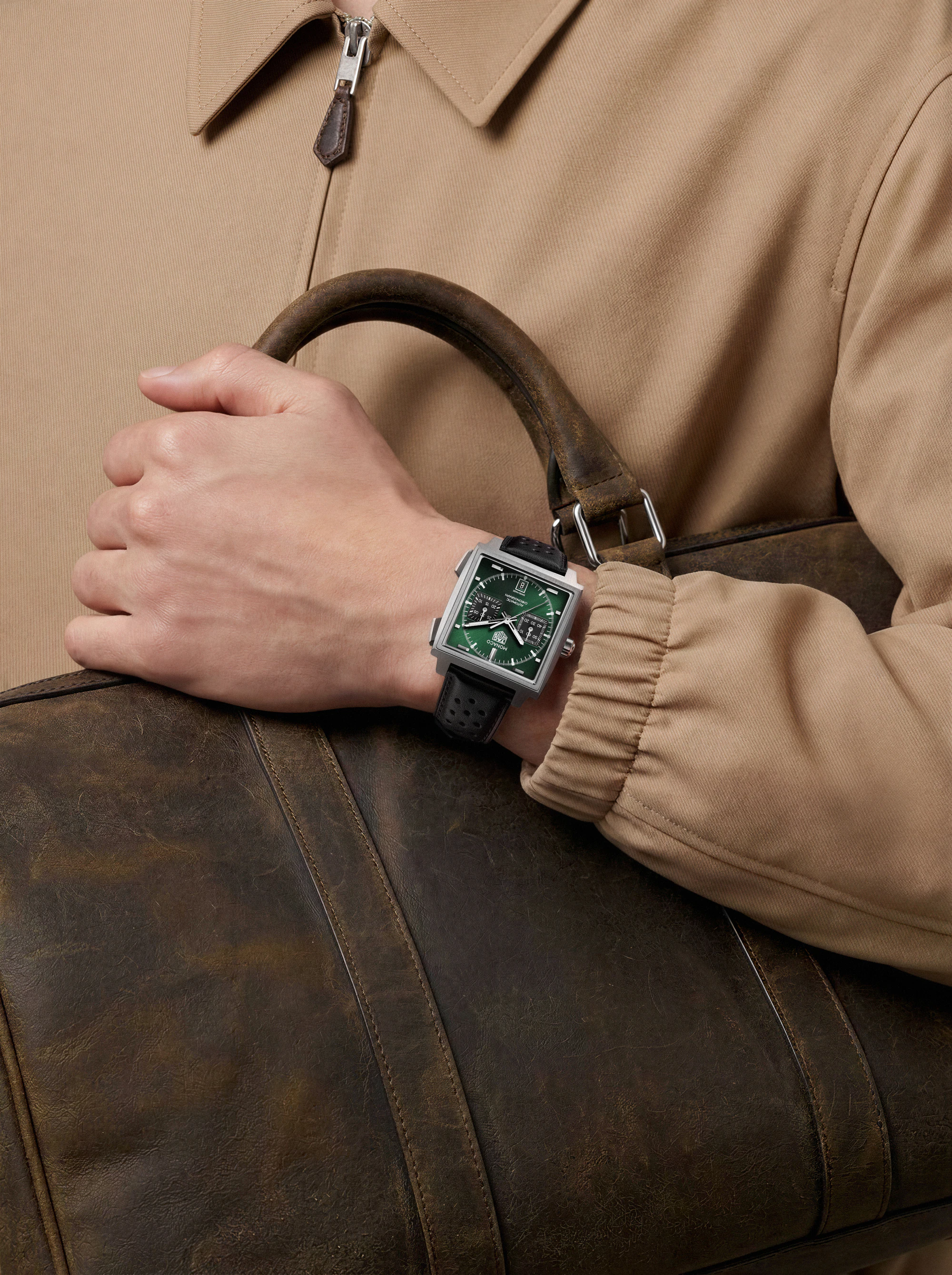
The movement is the in-house Calibre TH20-11, an automatic chronograph beating at 28,800 vph with 80 hours of power reserve — one of the stronger in-house calibers TAG Heuer has produced in the modern era. The green sunray-brushed dial with black opaline counters is the standout colorway; the bi-compax layout maintains the Monaco's signature asymmetry. The CDW2180 doesn't reimagine the Monaco. It makes the existing Monaco accessible to wrists and wardrobes that the steel version serves less well.
Official page: tagheuer.com — Monaco Chronograph CDW2180.FC8360
7. Cartier Tortue Small Model — 18k Yellow Gold
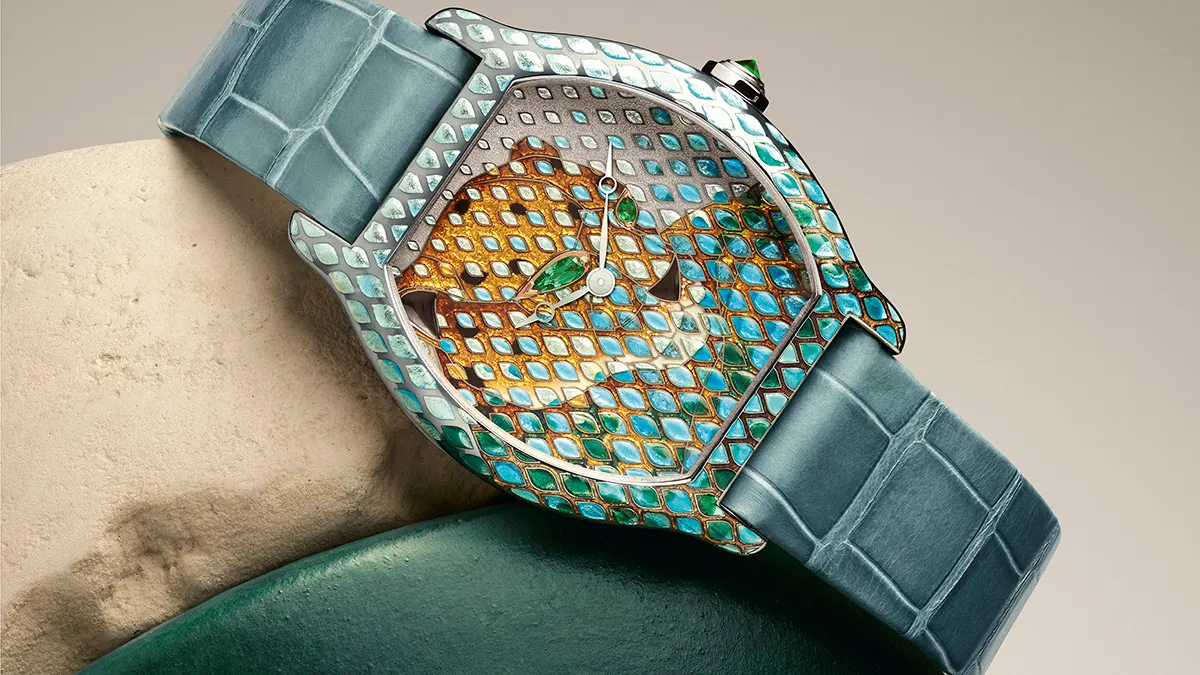
There are watch shapes that are historical, and there are watch shapes that are canonical. The Tortue is canonical. Cartier introduced it in 1912 — before the Tank, before the Santos became the form it is today — and it represents the era when the idea of a wristwatch for men was still being argued over, when watchmakers had to design for a format that didn't yet have an established visual vocabulary. The Tortue, with its barrel-like case that curves to follow the wrist, is a primary document of that argument.
The return of the Small Model in 18k yellow gold is Cartier making a statement about where the dress watch sits in 2026. The current market has spent several years asking for watches that wear smaller and live in the formal register — the 2010s bias toward large sports watches has given way, gradually, to a renewed interest in shape, proportion, and the kind of restrained elegance that doesn't announce itself across a room. The Tortue Small Model is the maximum expression of that tendency. The champagne-colored dial pairs with shiny black alligator, and the sapphire cabochon crown is the single decorative accent on an otherwise perfectly austere case.
It is not a watch for people who want to be noticed wearing a watch. It is a watch for people who understand that the most legible form of luxury is the kind that doesn't need to explain itself.
On the Cartier radar? Best Cartier Santos Alternatives ($50–$2,700)
Official page: cartier.com — Tortue Watch
8. H. Moser & Cie. Streamliner Small Seconds Lime Green Enamel
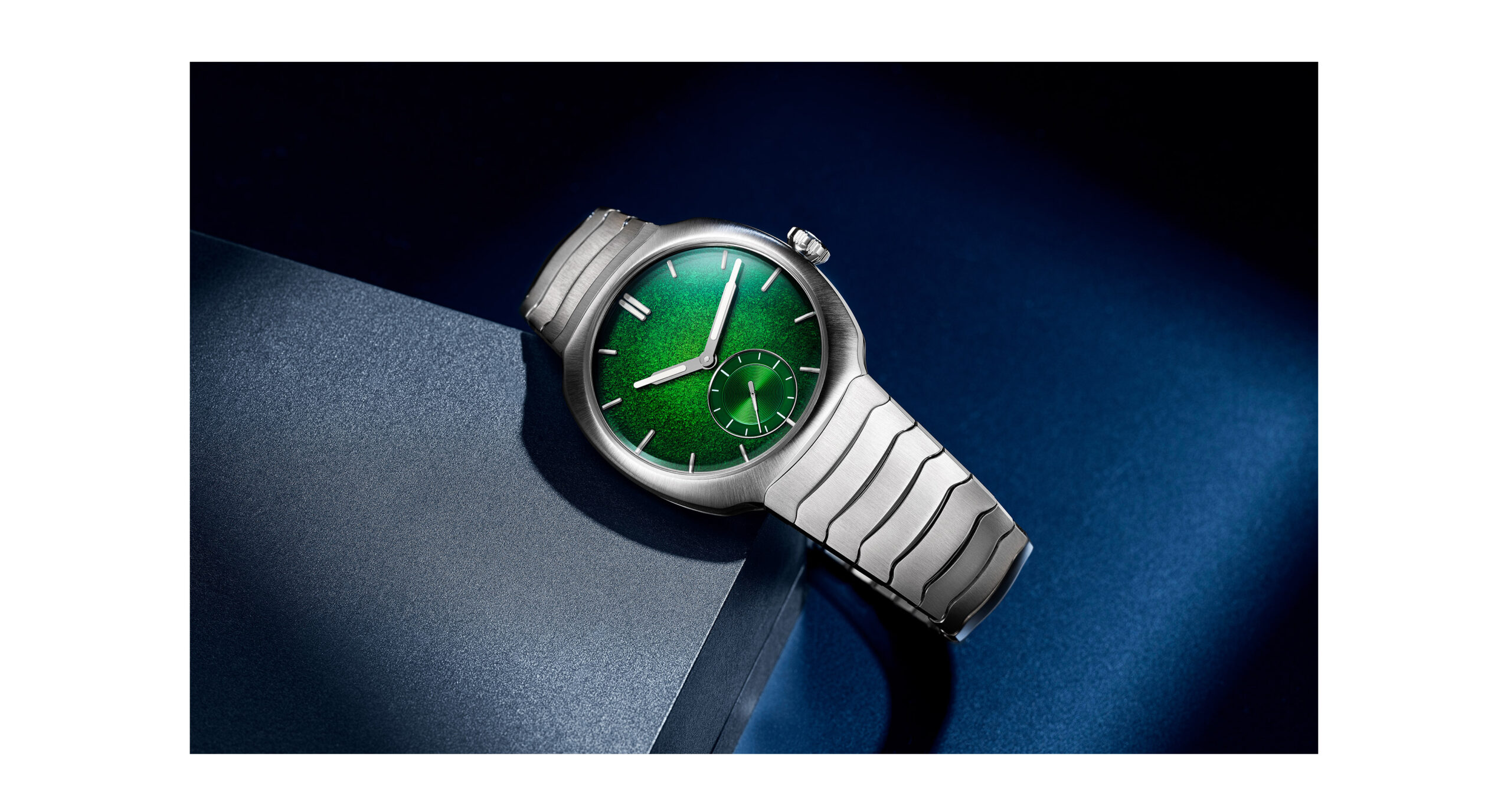
H. Moser & Cie. has a deliberate policy of making its dials from enamel rather than printing on them, which means every new color in the catalog represents a materials conversation as much as a design one. Enamel in lime green is not straightforward — the temperature at which the color stabilizes during firing is specific, the interaction with the brass substrate must be controlled, and the fumé gradient that Moser insists upon requires twelve separate firings to achieve without visible pixellation.
The Streamliner platform is one of the best executions of the integrated bracelet concept in contemporary watchmaking. The case-to-bracelet transition is seamless in a way that competitive pieces at similar price points don't always achieve, and the comfort that results — on-wrist, over a full day — is the kind of thing you notice when you take the watch off at the end of it. The Small Seconds complication at 6 o'clock maintains the Streamliner's emphasis on visual clarity without overcrowding a dial that earns its open space. The 39mm integrated steel case is water-resistant to 120 meters, housing the HMC 500 calibre with its platinum micro-rotor.
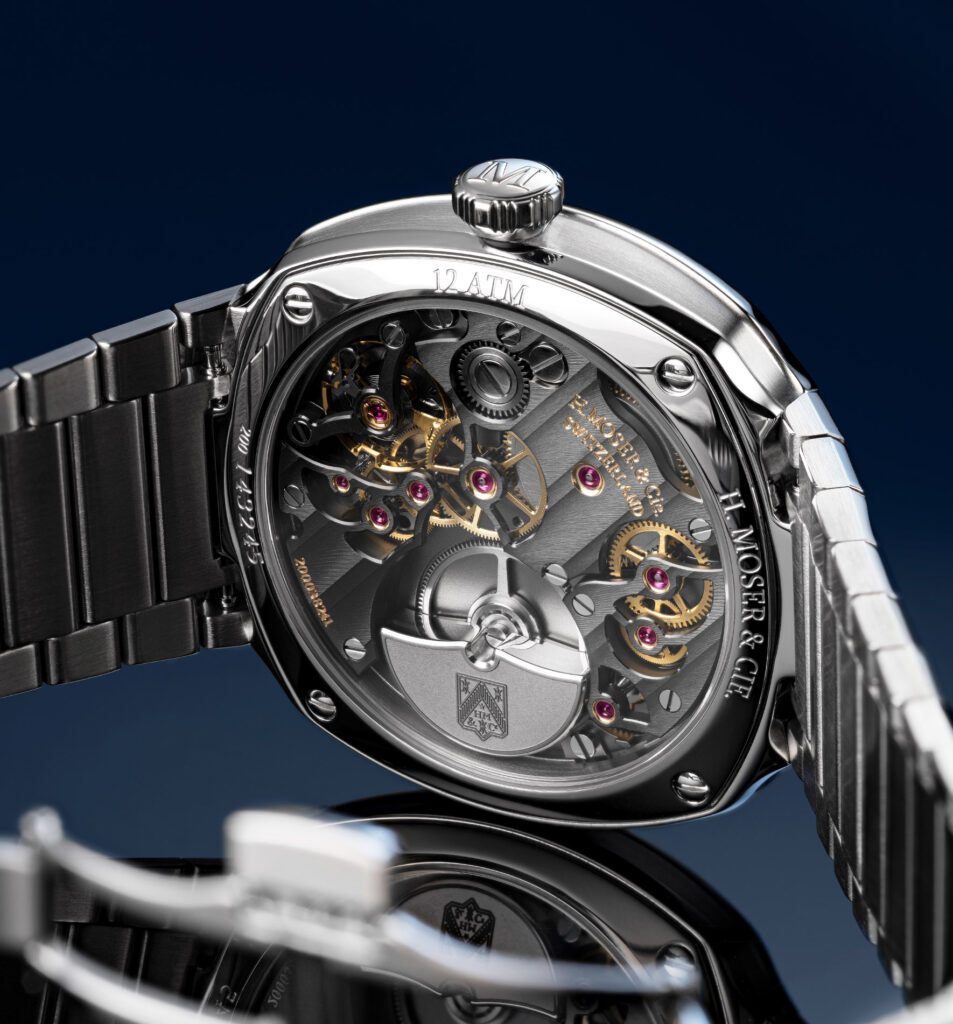
The lime green enamel against the polished and brushed steel surfaces of the case and bracelet is — there is no neutral way to say this — aggressively good. Available exclusively through nine Moser boutiques worldwide. This is a boutique-edition watch that actually justifies the designation.
Official page: h-moser.com — Streamliner Small Seconds Lime Green
9. Seiko Prospex 1965 Heritage Diver [Ref. HBC005]
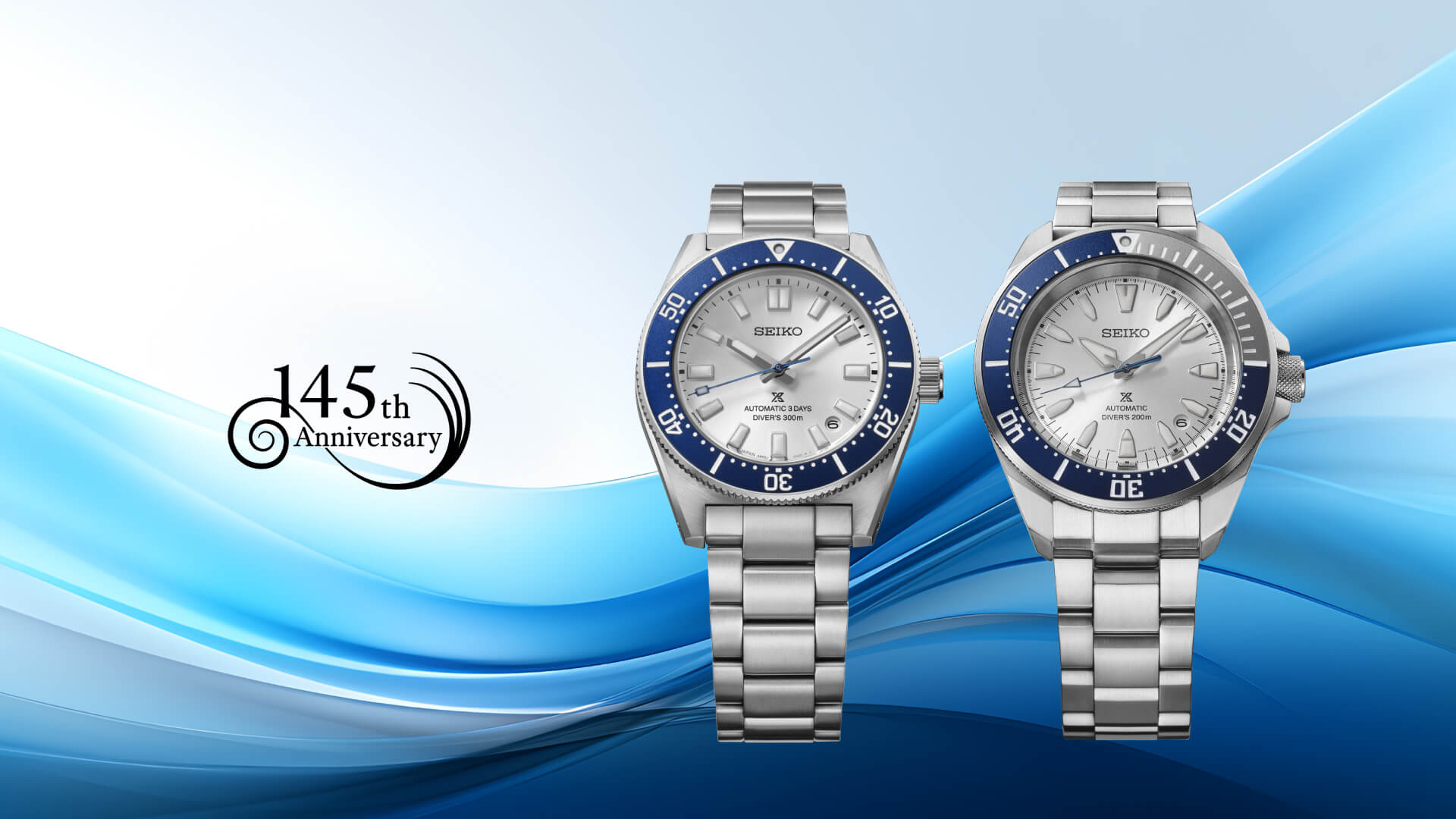
Seiko's 1965 Heritage Diver was already one of the more thoughtfully proportioned pieces in the modern Prospex catalog before this anniversary edition arrived. The 40mm case, the 46.4mm lug-to-lug, the 13mm profile — these numbers tell the story of a watch designed to wear across as many wrists as possible without compromising the dive watch credentials that the original 62MAS, Japan's first dive watch, established in 1965. The HBC005 applies a Seiko Blue bezel insert to that proven geometry and adds a brushed silver-white dial with lume-filled markers and a single blue seconds hand.
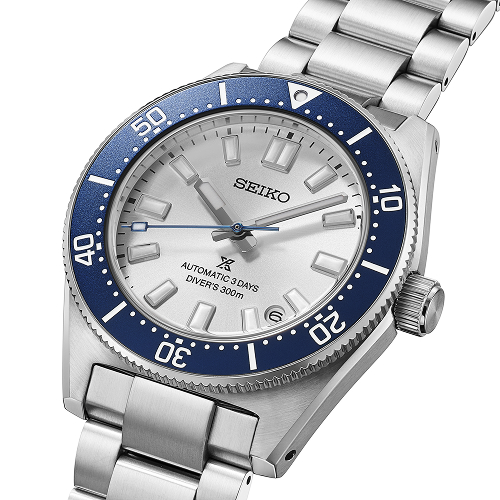
What elevates the HBC005 above a colorway release is the execution at the details. Domed sapphire crystal with internal anti-reflective treatment. Super-hard coating on the case and bracelet. Calibre 6R55 with 72 hours of power reserve. A push-button micro-adjust clasp across 15mm of range. For $1,400, in a limited run of 4,000 pieces, these are not the specifications of a brand doing the minimum for an anniversary watch.
The HBC005 is the connoisseur's anniversary pick — the kind of watch that rewards the person who knows what it is as much as it rewards the person discovering it for the first time.
Read more: Seiko HBC005 & Samurai HBB001 — 145th Anniversary Deep Dive
Official page: seikowatches.com — HBC005
10. Baltic × Space One Seconde Majeure
Baltic has been one of the more interesting independent stories in watchmaking over the past several years — a French micro-brand that has consistently punched above its price point by doing one thing very well: identifying complications that make excellent mechanical sense at accessible prices and then sourcing or developing movements capable of delivering them.
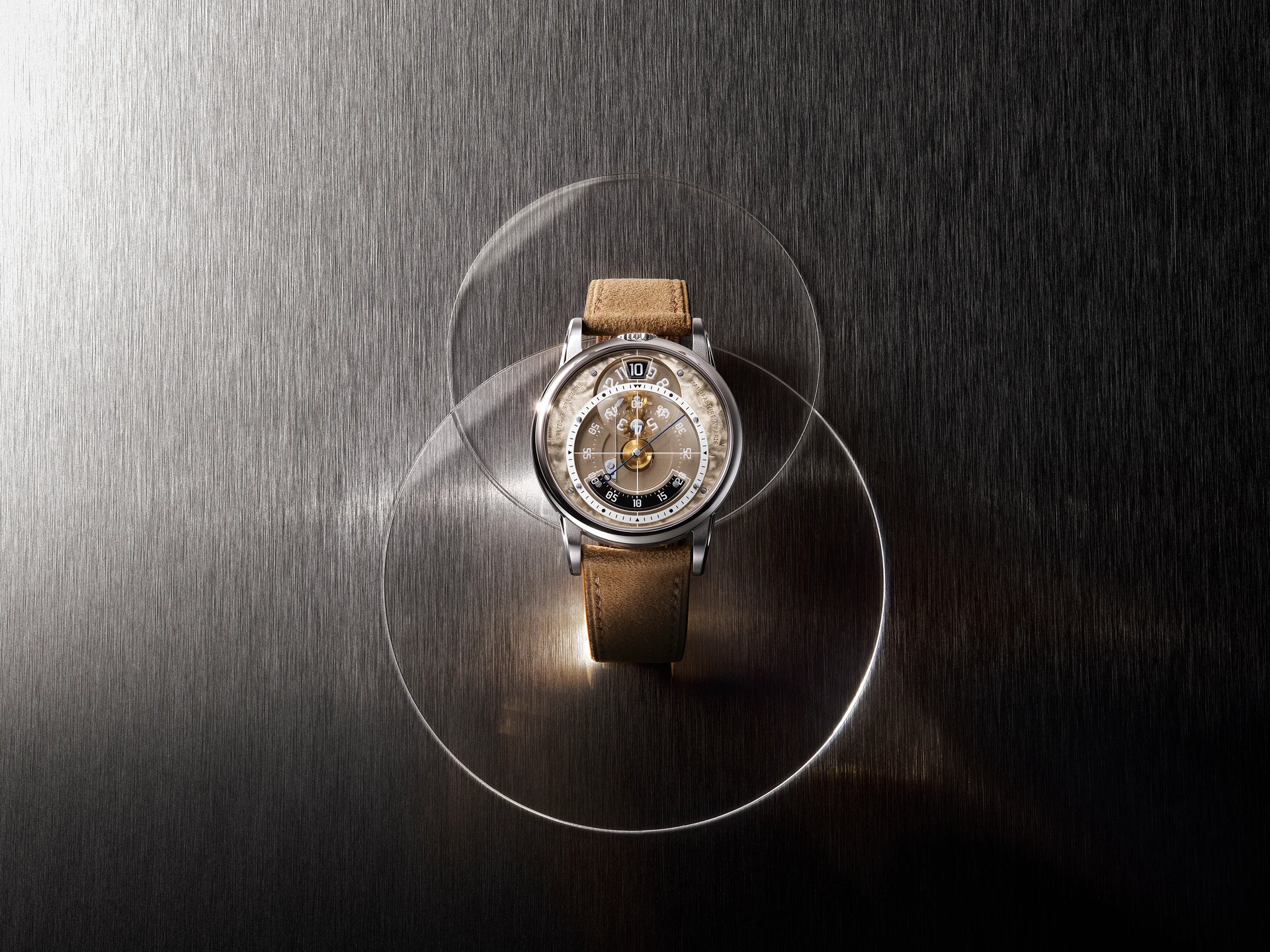
The Seconde Majeure, a collaboration with Space One featuring a jumping-hour module developed by independent watchmaker Théo Auffret, arrives with two sapphire crystal discs that display the time in a decentralised layout: hours jump at 12 o'clock through a framed window, oversized minutes arc at 6 o'clock, and a large seconds hand glides above its own peripheral track. The plate is milled from a single piece of maillechort — German silver — and available in brushed or Auffret's signature charbonné treatment. The 38.5mm 904L steel case sits 12.3mm thick with a 47.5mm lug-to-lug. Power comes from an automatic Soprod P024 with the jumping-hour module layered on top.
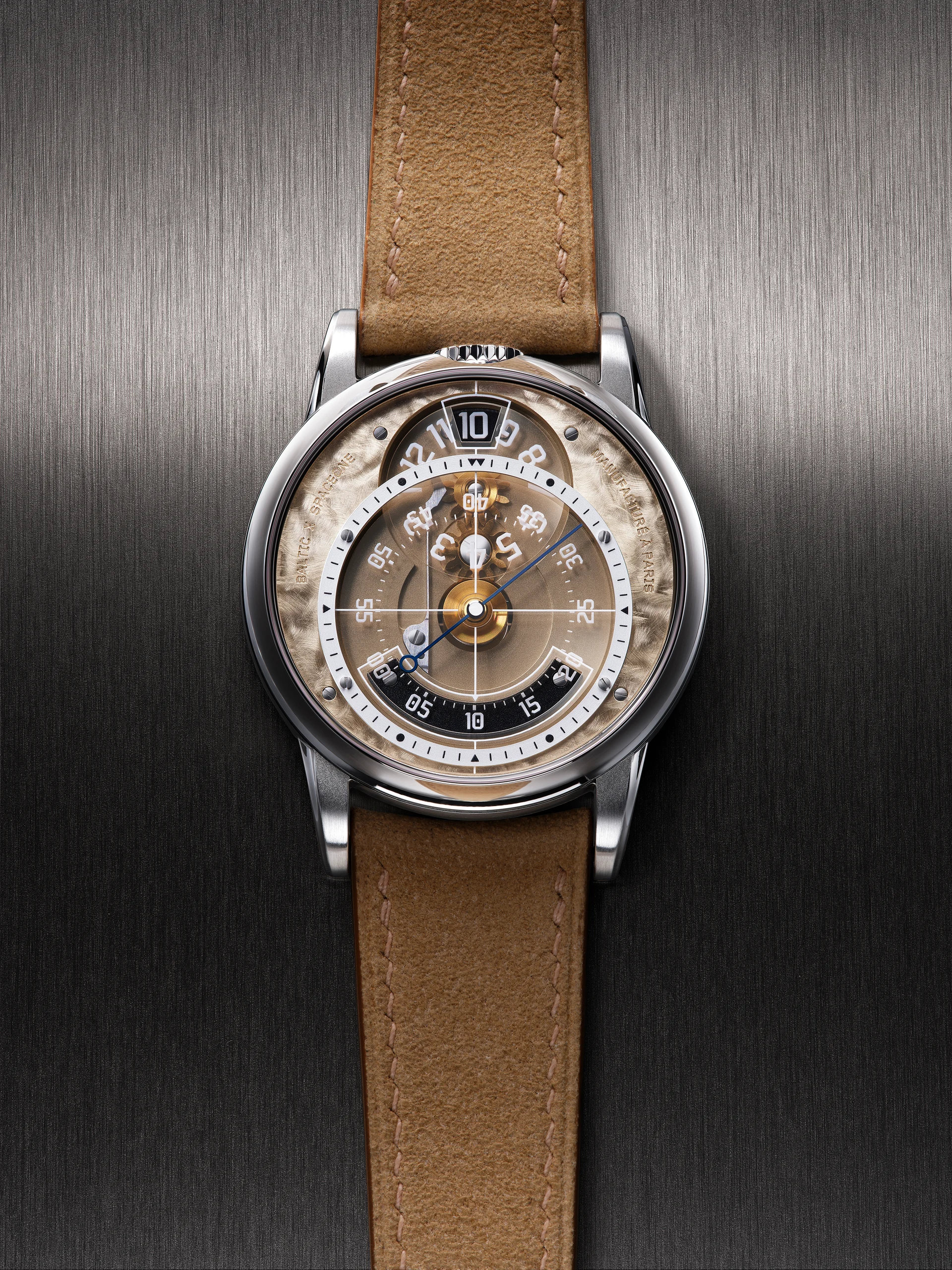
Those two details together — a jumping-hour module by a respected independent maker and a sapphire plate — at this price point would be notable from any brand. From Baltic, at the scale they operate, it is something more interesting: evidence that the independent sector's access to sophisticated movements and manufacturing has expanded in ways that are beginning to close the gap between accessible watchmaking and what was, until recently, reserved for maisons with century-long histories. Prices start at €2,500 for the brushed version.
If May's biggest story was about how much meaning a collaboration between two Swiss institutions can leverage at $400, the Seconde Majeure tells a complementary story: how much watchmaking a small, independent operation can deliver for people who have done the reading.
Official page: baltic-spaceone.com — Seconde Majeure
What May Told Us
A month that runs from a $400 bioceramic pocket watch to solid yellow gold Grand Seiko to an independent jumping-hour collaboration is not a month with a single thesis. But if there is a through line in May 2026, it is that the watch world is comfortable operating across multiple registers simultaneously — and that the most interesting things are happening at both ends of the price spectrum, not only in the middle. The MoonSwatch-era democratization of horological iconography continues to find new expressions. The high end is moving with genuine ambition. And somewhere in between, in titanium and enamel and sapphire, the rest of the industry is navigating a market that rewards clarity of purpose above almost everything else.
May was a good month. Come back in June.