Being Brazilian and spending more time than I probably should reading about watches, I've always been curious about what's actually coming out of my own country. The global watch community tends to look toward Switzerland, Japan, or the UK when discussing independent watchmakers and microbrands. Brazil rarely makes the list.
When I started digging seriously, I found a handful of brands worth knowing, each with a very different relationship to the word "Brazilian." That distinction turned out to matter more than I expected — and it's the thread I'll follow through this piece.
Founded vs. Made: The Distinction That Matters
There is a real difference between a watch brand founded by a Brazilian and a watch brand made in Brazil. A Brazilian founder can run their entire operation from São Paulo and design every detail themselves, but still assemble the final watch in Hong Kong using Japanese movements — completely legitimate, but different from a brand doing the harder work of building actual manufacturing capacity inside the country.
Both count as Brazilian in different ways. The ones actually producing watches here deserve extra recognition, because it means navigating Brazil's complex import duties on watch components, operating in a relatively small enthusiast market, and working without any meaningful local supply chain for movements or cases. When a brand does it anyway, that says something.
Statera — The One Actually Making Watches in Brazil
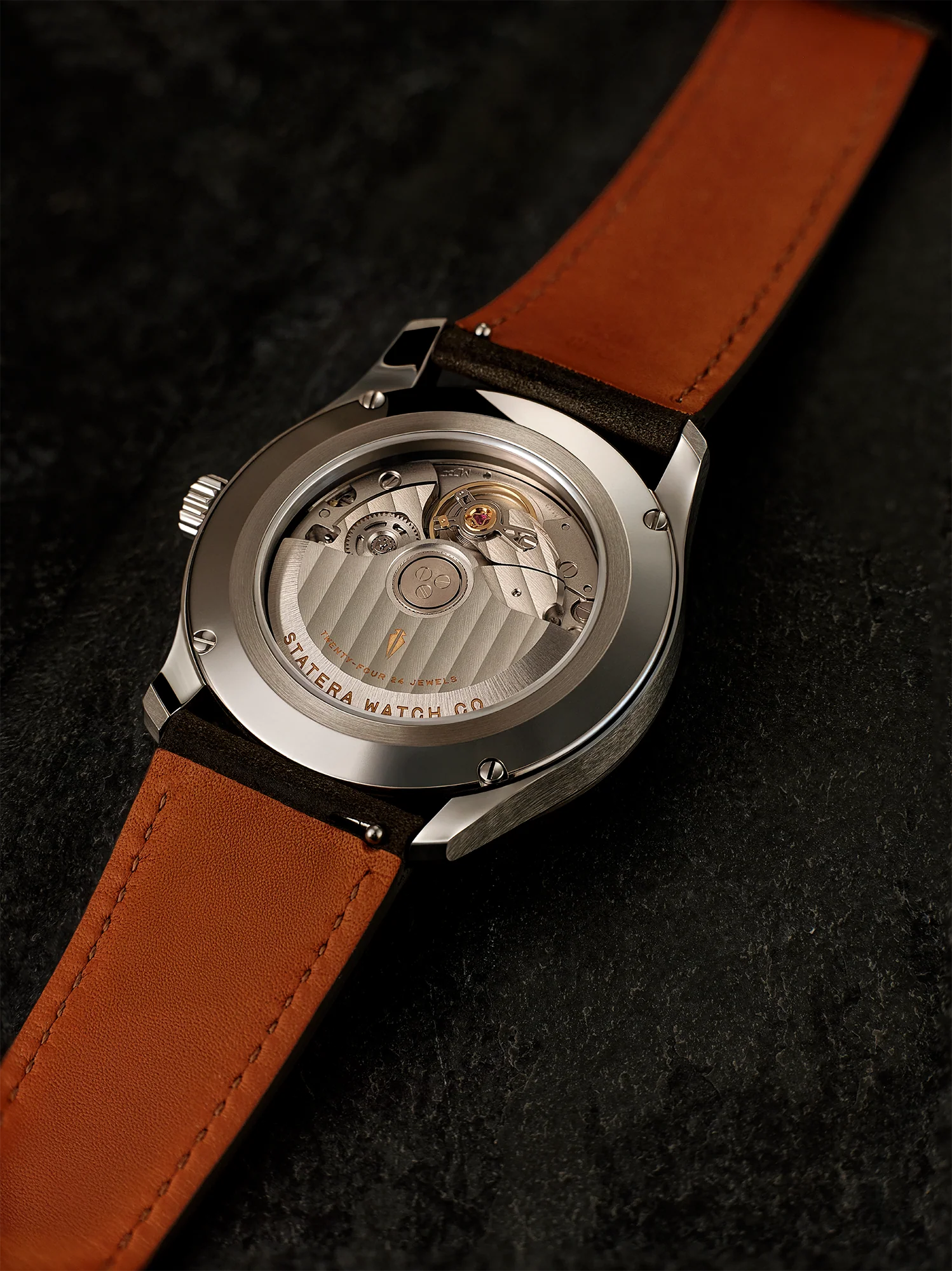
Statera Watch Co. has the most compelling story on this list and the strongest claim to being the first truly independent watchmaker not just founded, but built in Brazil. Rafael Guimarães and Antonio Almir dos Santos Neto — two childhood friends who have known each other since they were five years old — launched the brand in 2021. Rafael came from the technology sector; Antonio from veterinary medicine. Neither had a formal watchmaking background. They decided to make watches in Brazil using Grand Feu enamel dials.
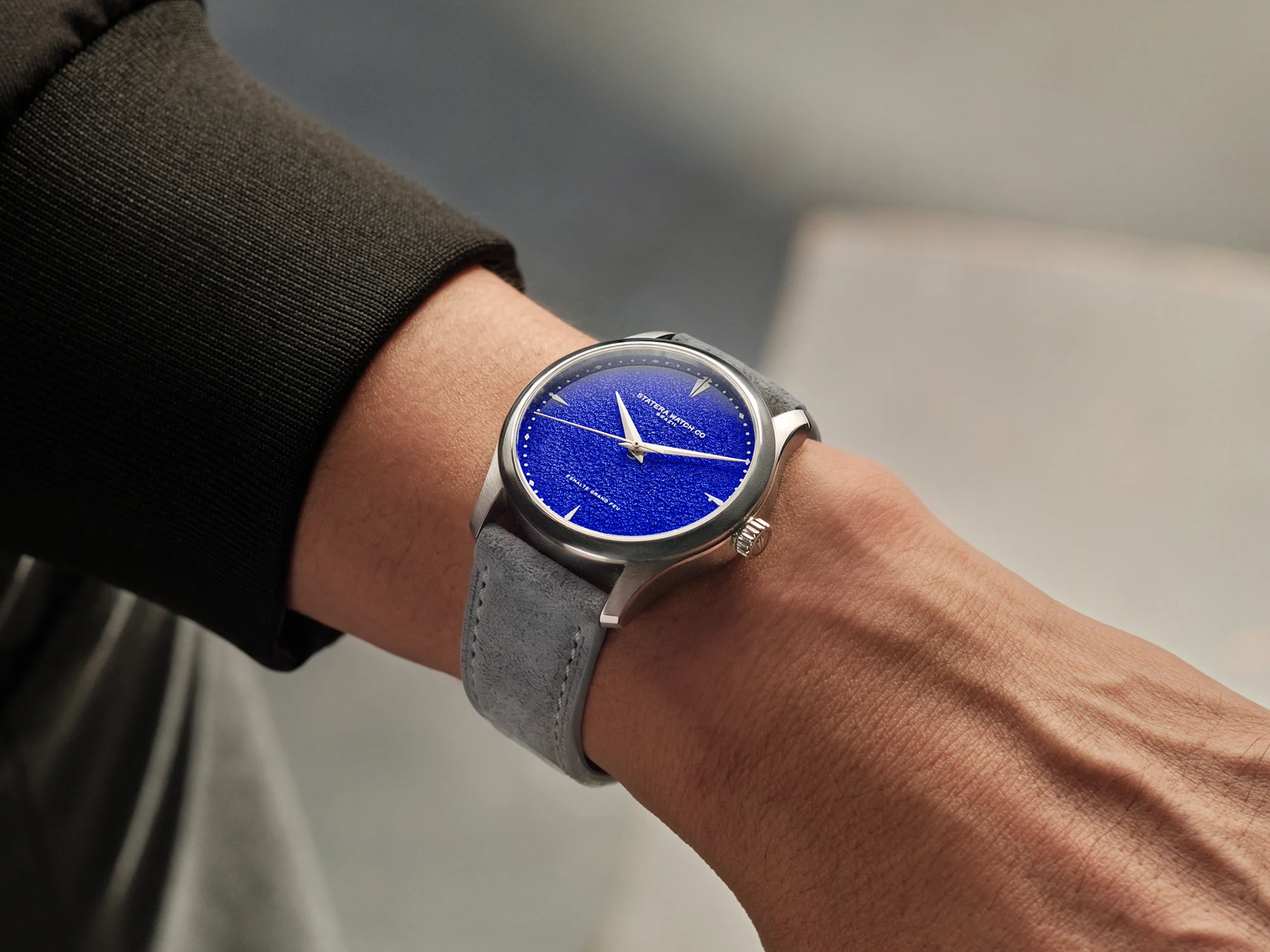
Their first watch, the ST01, was fabricated in France as a proof of concept. What came next was more serious: the ST02, with enamel dials made in-house at their Brazilian atelier, in collaboration with Swiss-Brazilian artisan Angélique Chappuis. Grand Feu is one of the most demanding techniques in dial-making — vitreous enamel fired at over 800°C, multiple times, on a copper or gold base. The results are dials with a depth and luminosity that painted dials cannot replicate: deep blacks, rich ivories, royal blues, all made in Brazil.
The ST02 comes in 37mm and 39mm, runs Swiss movements, and is largely assembled at their local atelier. Prices reflect the work involved — this is not a budget brand — but for what they are doing, and where they are doing it, the value argument is real.
Made in Brazil: Yes — dials are fired and assembled at their Brazilian atelier.
ACTO — Brazil's Luxury Ambition, Assembled in Manaus
If Statera is the artisanal end of the Brazilian scene, ACTO is the most commercially ambitious. Founded in 2020 by Thiago Chiká — who was 21 at the time — and based in Porto Alegre, ACTO set out to do something no Brazilian brand had seriously attempted: build a high-end watch brand at home, and sell it with the language and scarcity of luxury rather than the price of a microbrand. Chiká describes the goal as carving out a "fifth category," sitting between mainstream watch brands and traditional Swiss luxury.
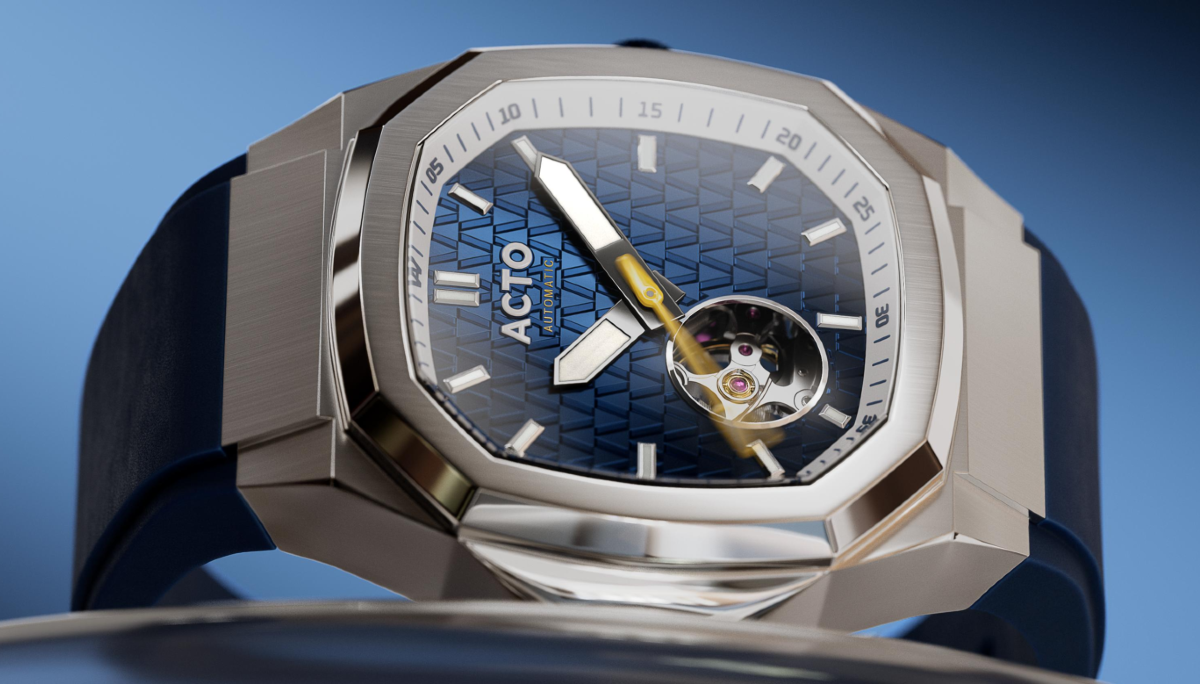
What makes ACTO relevant to this list is that it actually assembles in Brazil. The watches are put together at a third-party factory in Manaus, in the state of Amazonas, using components sourced from Chinese factories that the brand says are audited and certified by Swiss firms. The movements are Japanese Miyota across the range — the flagship AD01 runs a Miyota 8217, and the AS01 Angra a Miyota 82S5 with an open-heart aperture exposing the balance wheel. Worth clearing up a common assumption: despite the brand's frequent "Swiss" framing, the calibers are not Swiss. What is Swiss is the Super-LumiNova on the dials and the auditing of those Chinese component suppliers — the engine inside is Japanese. So this isn't local manufacturing in the Statera sense, but it isn't fully offshore assembly either: the final watch is built in Brazil, which is more than most brands in the price bracket can claim.
The designs lean unapologetically bold and Brazilian. The AS01 Angra is a tribute to Angra dos Reis, its dial texture inspired by sea-turtle shell and its blue-green tones echoing the 365 islands of the bay; it shipped as a numbered run of 300 with no restock. Other models include the AC01 Navigator and collaborations like the A003B, designed by aviation designer Erich Shibata. Prices run roughly R$5,000–15,000 (about US$1,000–3,000), and ACTO leans hard on scarcity — limited, numbered drops marketed with a digital-product playbook that has driven triple-digit annual growth and, more recently, a minority investment from Thiago Nigro's Grupo Primo. It's the most polarizing brand here precisely because the marketing is as loud as the watchmaking — but the domestic assembly and the willingness to chase a luxury price point from Brazil make it impossible to leave off the list.
Made in Brazil: Partly — assembled in Manaus from imported components, with Japanese movements.
Roue — Brazilian Designer, Hong Kong Assembly
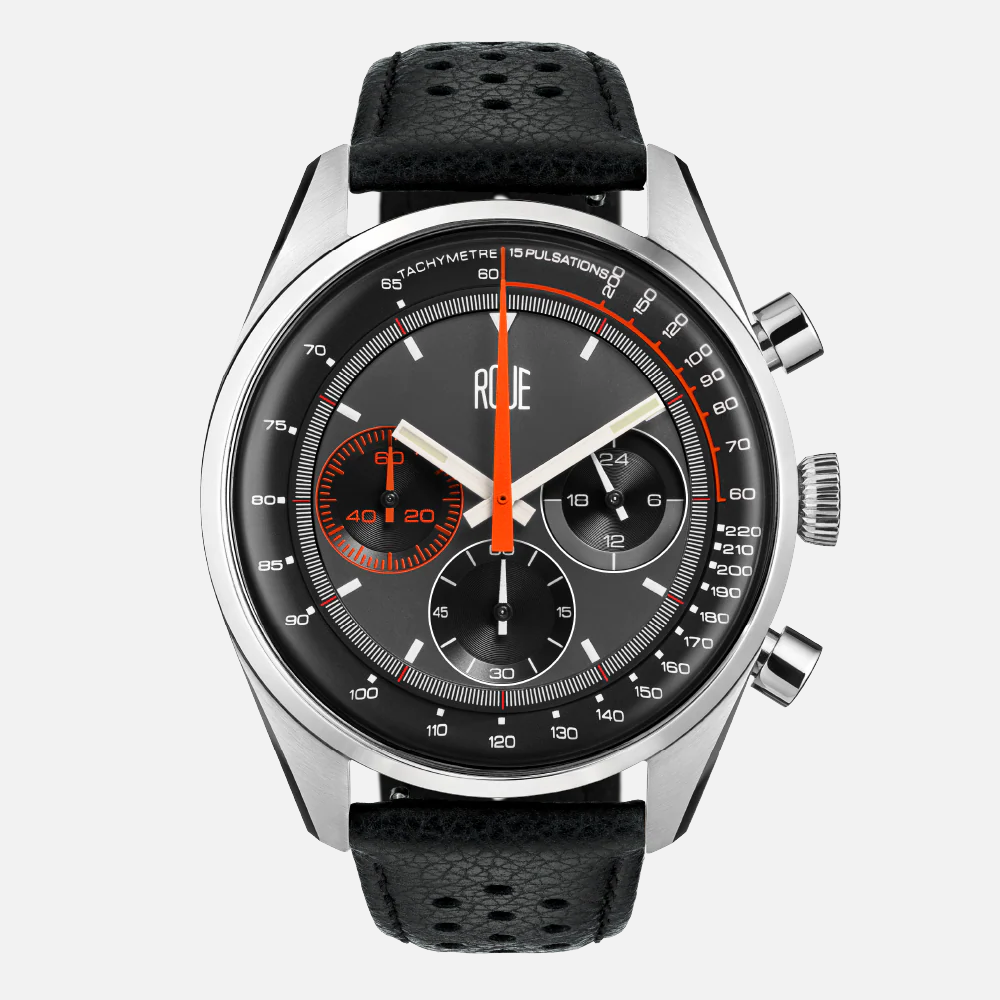
Roue was founded in 2017 by Alex Iervolino, a Brazilian designer and collector of vintage watches, classic cars, German Braun radios, and mid-century Scandinavian furniture. After more than 20 years in finance, Iervolino decided to build a watch brand around the one aesthetic obsession that tied all his interests together: the industrial and automotive design language of the 1960s and 1970s. The name means "wheel" in French — a nod to his passion for classic cars.
Every Roue watch is designed entirely by the founder himself, which is rarer than it sounds in the microbrand world. The watches use Japanese movements, known for reliability and ease of service, and are assembled in Hong Kong — one of the main quality hubs for non-Swiss microbrand production. The design language is disciplined: restrained color palettes, clean dial layouts, cases that respect the proportional references of their mid-century inspiration without copying any specific vintage reference.
Roue has built a genuine following among collectors who value considered design over horological complexity. The watches do not try to be Swiss; they try to look right for what they are, and at their price points they mostly succeed.
Made in Brazil: No — designed by a Brazilian, assembled in Hong Kong with Japanese movements.
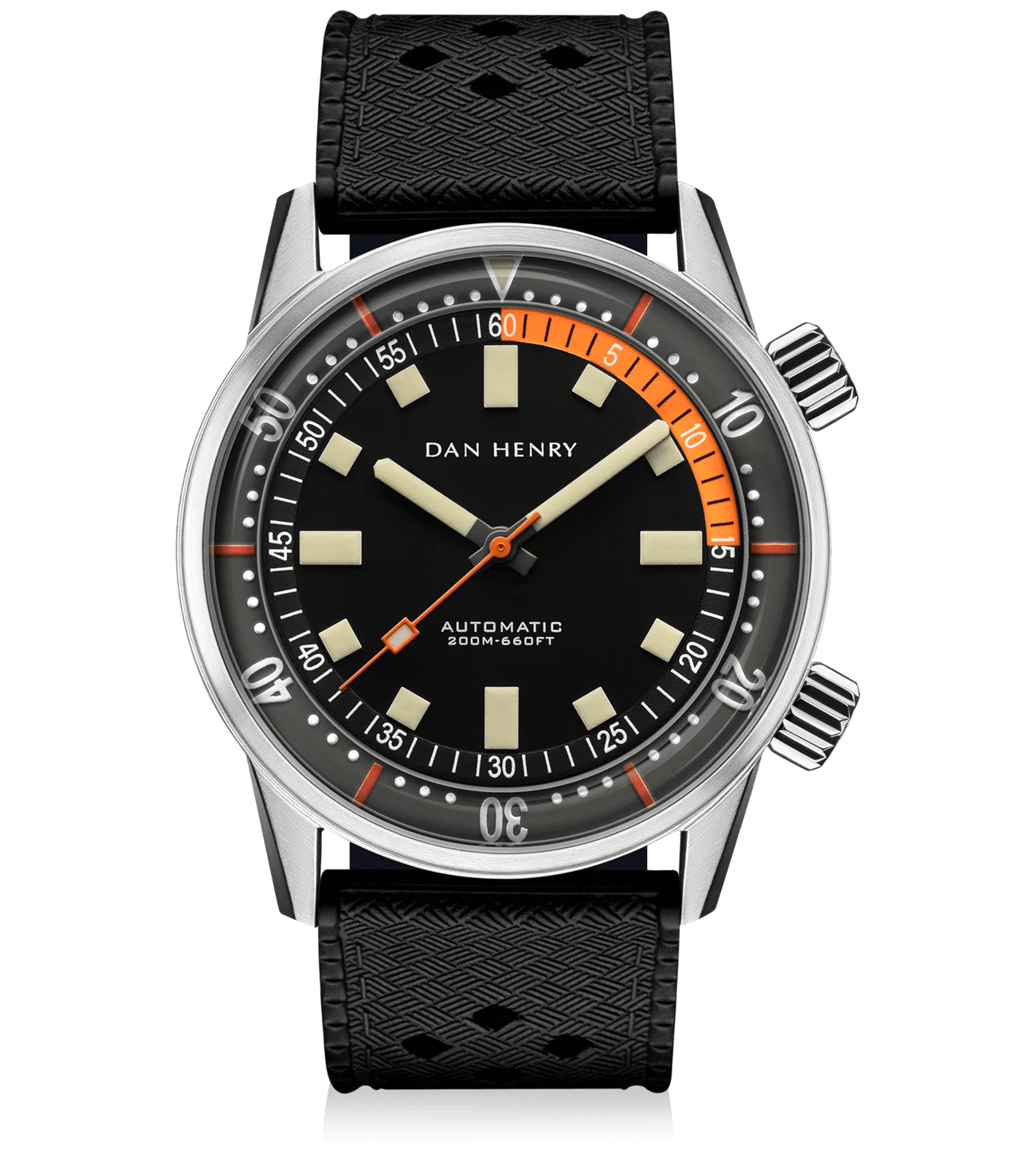
Dan Henry — A Brazilian's Love Letter to Vintage
Dan Henry is the most internationally visible name on this list. The founder — Dan Henry himself, based in São Paulo — is a collector of more than 1,500 vintage watches and the creator of Timeline.watch, one of the most comprehensive online encyclopedias of vintage timepieces in existence. He launched his eponymous brand in 2016 with a clear and well-executed premise: recreate the spirit and aesthetics of rare mid-20th-century watches at prices that do not require a serious budget.
The brand makes no pretense of horological complexity. Dan Henry watches use off-the-shelf movements — typically Miyota automatics or quartz — and their value proposition lives entirely in the quality of the design research behind them. Models like the 1963 Chronograph or the 1970 Field Watch are faithful recreations that evoke specific eras without copying any single reference, and they do it well enough that watch communities consistently recommend them to new collectors who want vintage aesthetics without vintage prices or vintage anxiety.
Dan Henry as a person is Brazilian. His brand operates internationally and manufactures overseas. But his encyclopedic knowledge of vintage watches informs every model, and there is a coherence to the catalog that reflects genuine expertise rather than trend-chasing. Knowing that the level of research behind it comes from a Brazilian collector makes it easier to see as more than just another affordable vintage-inspired line.
Made in Brazil: No — founded and curated by a Brazilian from São Paulo, manufactured overseas.
Terranova — Brazilian Culture on the Dial
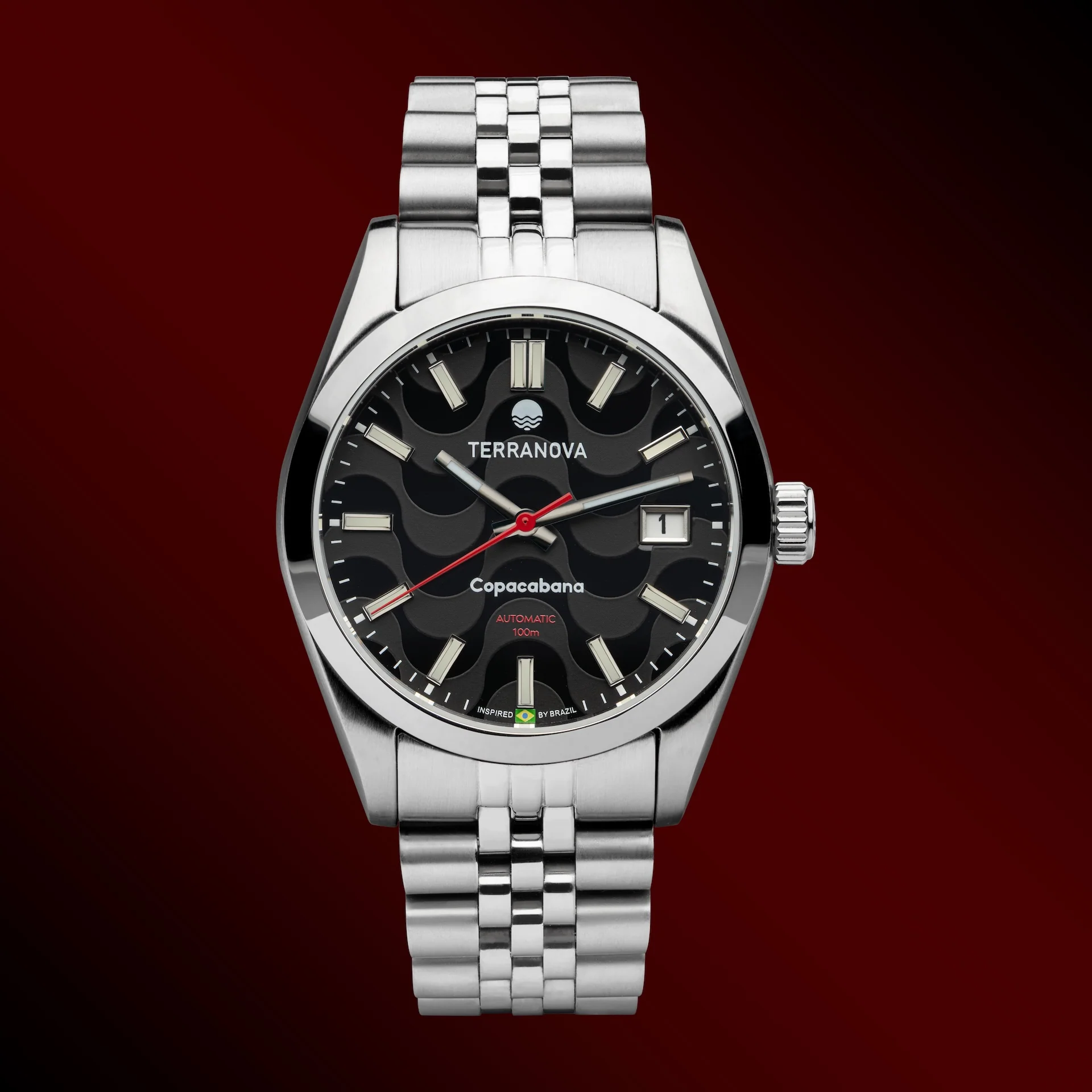
Terranova is the newest brand on this list and the most explicitly rooted in Brazilian identity. Founded in 2024 by Douglas Emerich — an engineer from Várzea da Palma, a small city in the north of Minas Gerais — Terranova's stated purpose is to create watches inspired by Brazil, not merely founded here. The name itself carries both the Portuguese "terra nova" (new land) and a sense of Brazil's geographic and cultural breadth.
The brand's debut model is the Copacabana, a tribute to Rio de Janeiro's most internationally recognized beach. The dial reproduces the iconic geometric wave mosaic of the Copacabana boardwalk through different textures that shift in appearance depending on the light. It is a design detail that rewards attention — not a logo or a color, but an actual reference to a specific place rendered in the dial surface. The movement is a Seiko NH35, water resistance is 100 meters, and the crown is screw-down for improved protection.
As a brand launched in 2024, Terranova is early. But the intentionality behind it is clear: every model is tied to a specific Brazilian place or cultural reference, and the execution on the debut model demonstrates more craft than most first releases manage. The road ahead will test whether that cultural thread can sustain a full catalog.
Made in Brazil: Brand is Brazilian and based in Brazil; specific assembly location is not publicly confirmed.
Corso — Porto Alegre's Independent Voice
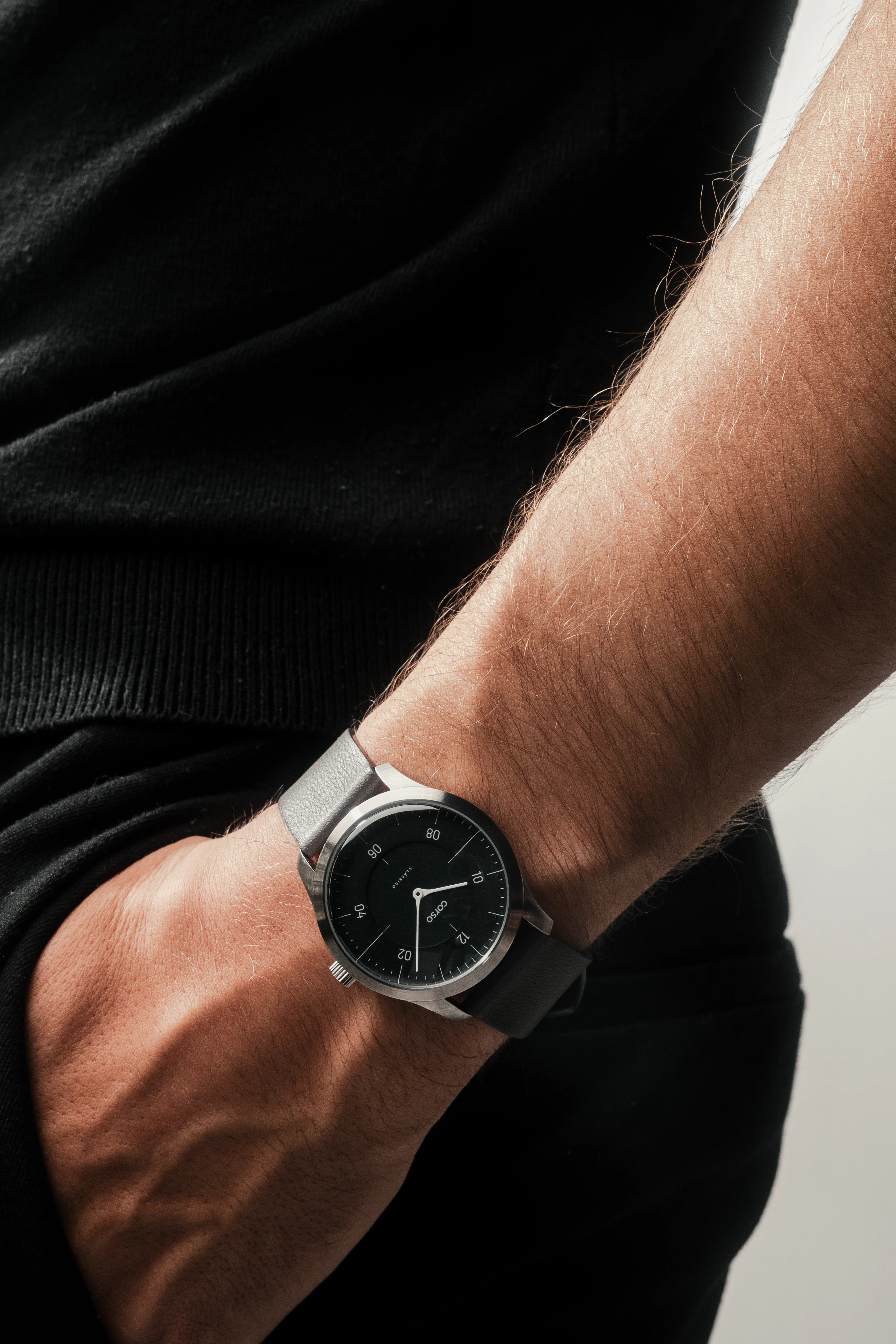
Corso Relógios is a watch brand from Porto Alegre, Rio Grande do Sul, founded by two friends with a shared passion for independent watchmaking and a message at the center of the project: Cada minuto importa — every minute matters. The brand produces limited, numbered editions for a select group of buyers who want something considered and exclusive rather than mass-produced.
The Clássico uses sapphire crystal rated at 9 on the Mohs scale, which Corso emphasizes as resistant to scratching in daily use. The brand operates primarily in the Brazilian domestic market through its direct website, corsowatches.com.br, and builds its appeal on the idea that a watch is not just a timekeeping tool but a reminder of what each moment costs. Specific details about movement sourcing and final assembly location are not publicly detailed — not unusual for a small independent brand at this stage of development — but the brand is clearly Brazilian in identity, based in Porto Alegre, and building for a Brazilian audience first.
Made in Brazil: Brand is founded and based in Porto Alegre; assembly specifics are not publicly confirmed.
What I Found
I expected to find one or two names and call it a day. What I actually found is a scene that is small, varied, and more serious than Brazil's reputation in watchmaking would suggest.
The range in ambition is striking. Statera is attempting something rare even by global standards — in-house Grand Feu enamel dials, local assembly, real craft — in a country with no established watchmaking infrastructure to lean on. ACTO is chasing the opposite end of that spectrum, assembling in Manaus and pricing like a luxury house while selling with the scarcity tactics of the digital-product world. Dan Henry is arguably one of the most knowledgeable vintage watch curators working anywhere and happens to be Brazilian. Roue brings a designer's sensibility to the microbrand format with unusual consistency. Terranova is connecting watchmaking to Brazilian place and culture in a way no other brand in this group has tried. Corso is building for a local market on the conviction that exclusivity and craft matter even at independent scale.
None of these are the same kind of brand. That's the point. Brazil has enough watchmaking happening to support a real conversation — and more than enough to justify paying attention.
| Brand | Founder | Based | Made in Brazil |
|---|---|---|---|
| Statera | Rafael Guimarães & Antonio dos Santos | Brazil | Yes — dials & assembly |
| ACTO | Thiago Chiká | Porto Alegre | Partly — assembled in Manaus, imported parts |
| Roue | Alex Iervolino | Brazil (founder) | No — assembled in Hong Kong |
| Dan Henry | Dan Henry | São Paulo | No — manufactured overseas |
| Terranova | Douglas Emerich | Minas Gerais | Not confirmed |
| Corso | Two founders | Porto Alegre | Not confirmed |