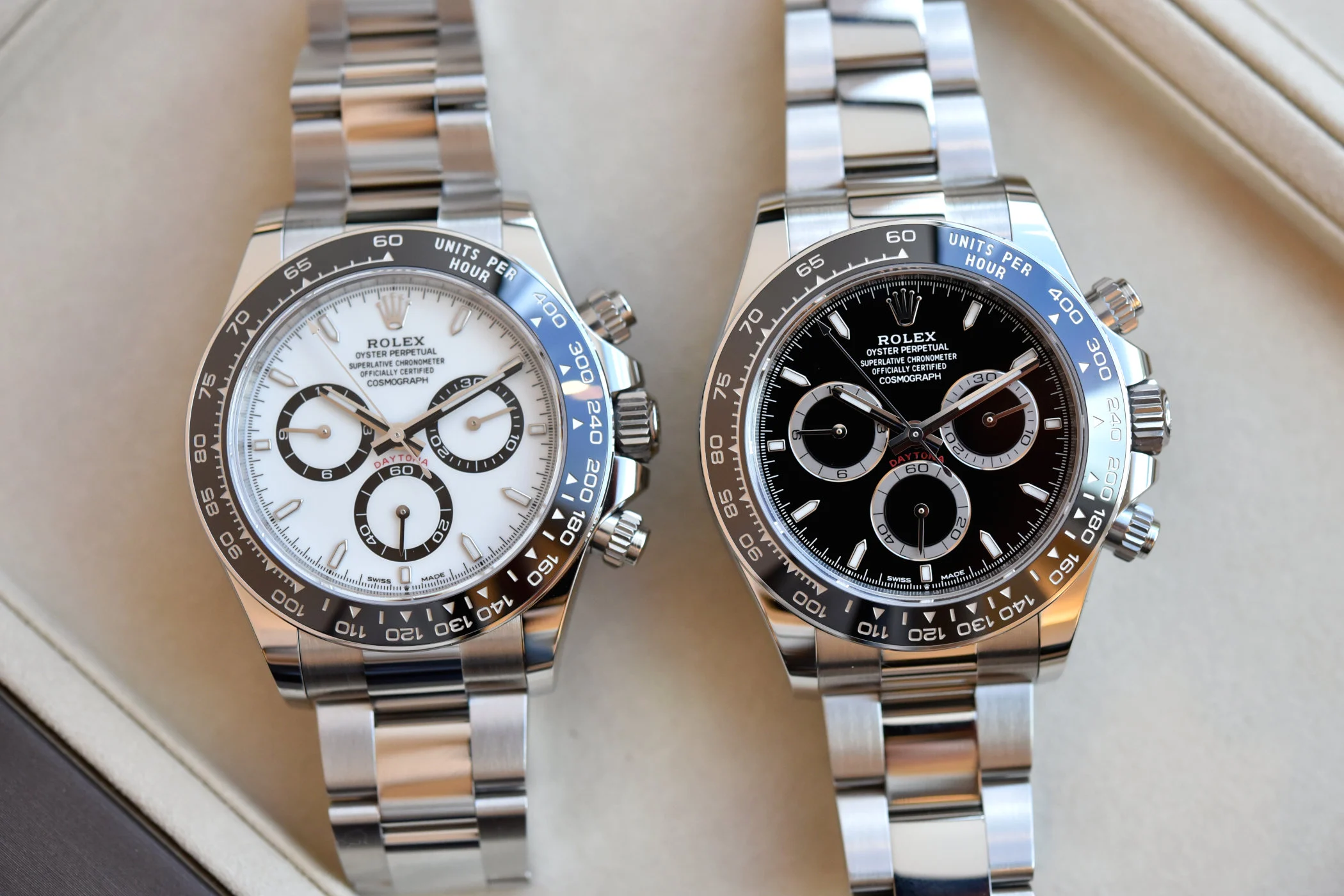
Rolex Cosmograph Daytona ref. 126500LN, white and black dials. Image: Monochrome Watches.
There are two ways to tell the story of the chronograph in the second half of the twentieth century. One is about Rolex, and the watch that became the most desired sports chronograph on earth. The other is about Zenith, and the movement that beat faster than anyone thought a production caliber could. For most of their histories these stories ran on separate tracks — a watchmaker in Geneva and a manufacture in Le Locle, two valleys apart.
And then, for twelve years, they became the same story. From 1988 to 2000, the engine inside the automatic Rolex Daytona was the Zenith El Primero. That single fact is the hinge this entire timeline turns on. Here is how both watches got there, and where each one stands today.
1963 — Rolex Names a Chronograph After a Racetrack
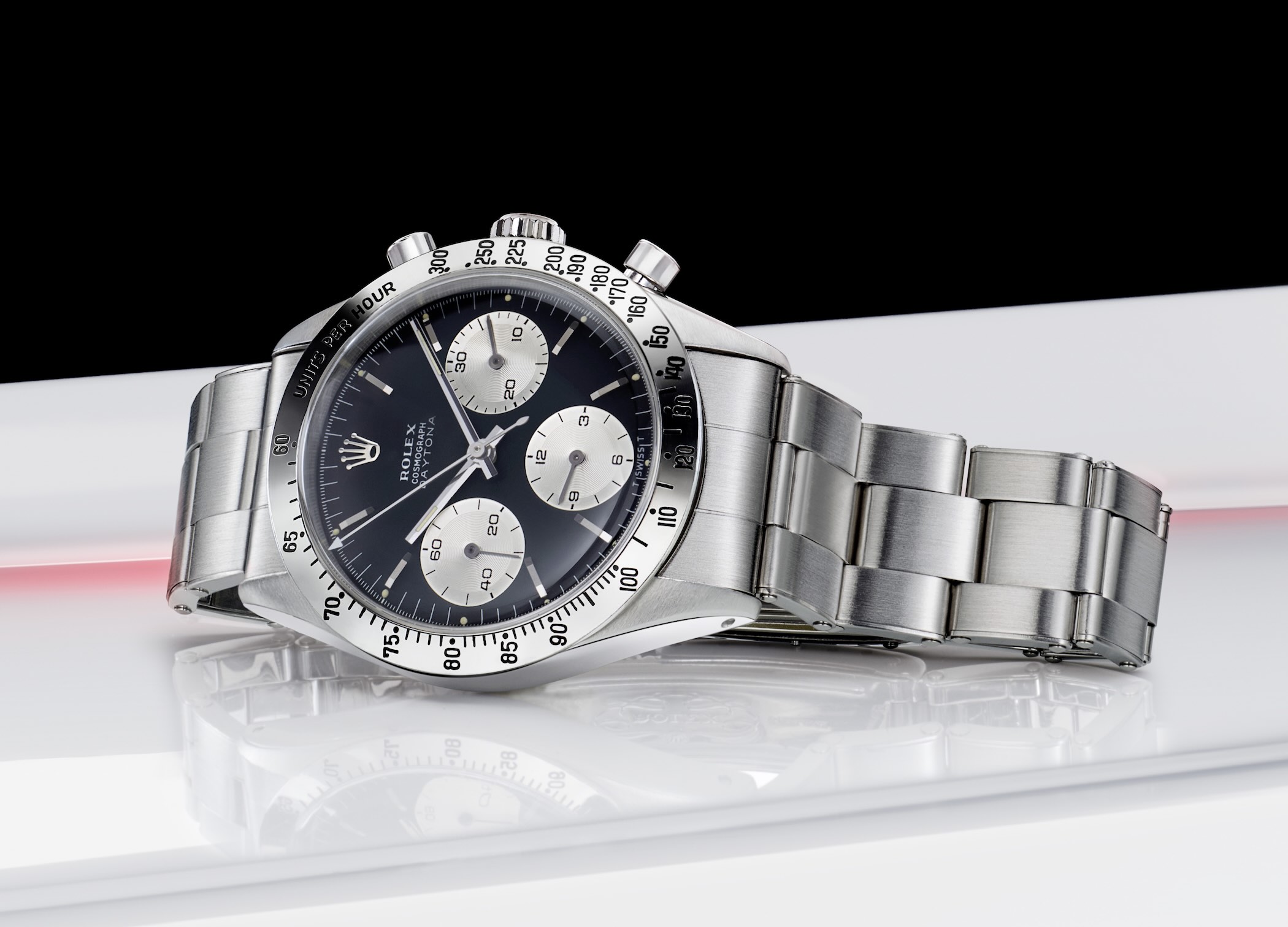
Rolex Cosmograph Daytona ref. 6239 (1963), the first of the line. Image: Monochrome Watches.
Rolex became the official timekeeper of the Daytona International Speedway in 1962, and in 1963 it released the reference 6239 to mark the partnership. The headline change over the chronographs that came before it was deceptively simple: Rolex moved the tachymeter scale off the dial and onto a metal bezel. That cleaned up the dial, improved legibility for a driver glancing down at speed, and gave the watch its new name — the Cosmograph.
The "Daytona" signature didn't even appear on the dial at first; it arrived around 1965, arcing above the running-seconds register at six o'clock. These early Daytonas were hand-wound, powered by a Valjoux movement, and — this is the part that still surprises people — they did not sell well. For most of the 1960s and 70s, the Cosmograph was the Rolex that sat in the display case.
1965–1969 — The "Paul Newman" Dial
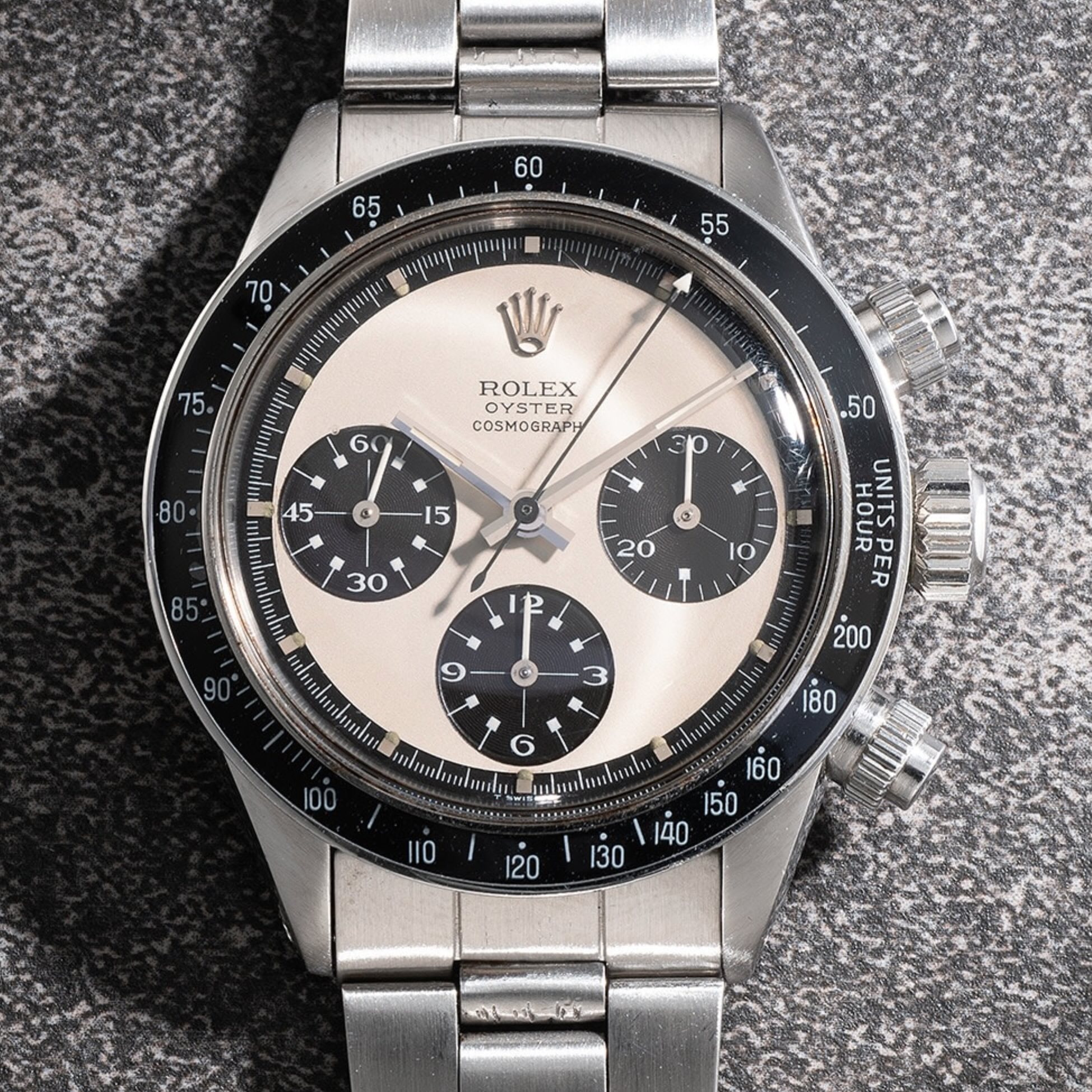
The "exotic" dial, later nicknamed "Paul Newman," made by dial supplier Singer. Image: Monochrome Watches.
Among those slow-selling Daytonas was a variant with an "exotic" dial: Art Deco numerals, contrasting sub-register rings, little cross-hairs, and a splash of red. Made by Rolex's dial supplier Singer, it was even less popular than the standard dial at the time — perhaps 5% of production.
Then the actor and racing driver Paul Newman started wearing one his wife Joanne Woodward had given him, engraved on the caseback with "DRIVE CAREFULLY ME." Decades later, in 2017, that exact watch sold at auction for $17.8 million, and "Paul Newman Daytona" became the most valuable four words in vintage watch collecting. It's the clearest example of a rule the Daytona keeps proving: its value was written by the market long after Rolex built it.
1969 — Zenith Fires "The First"
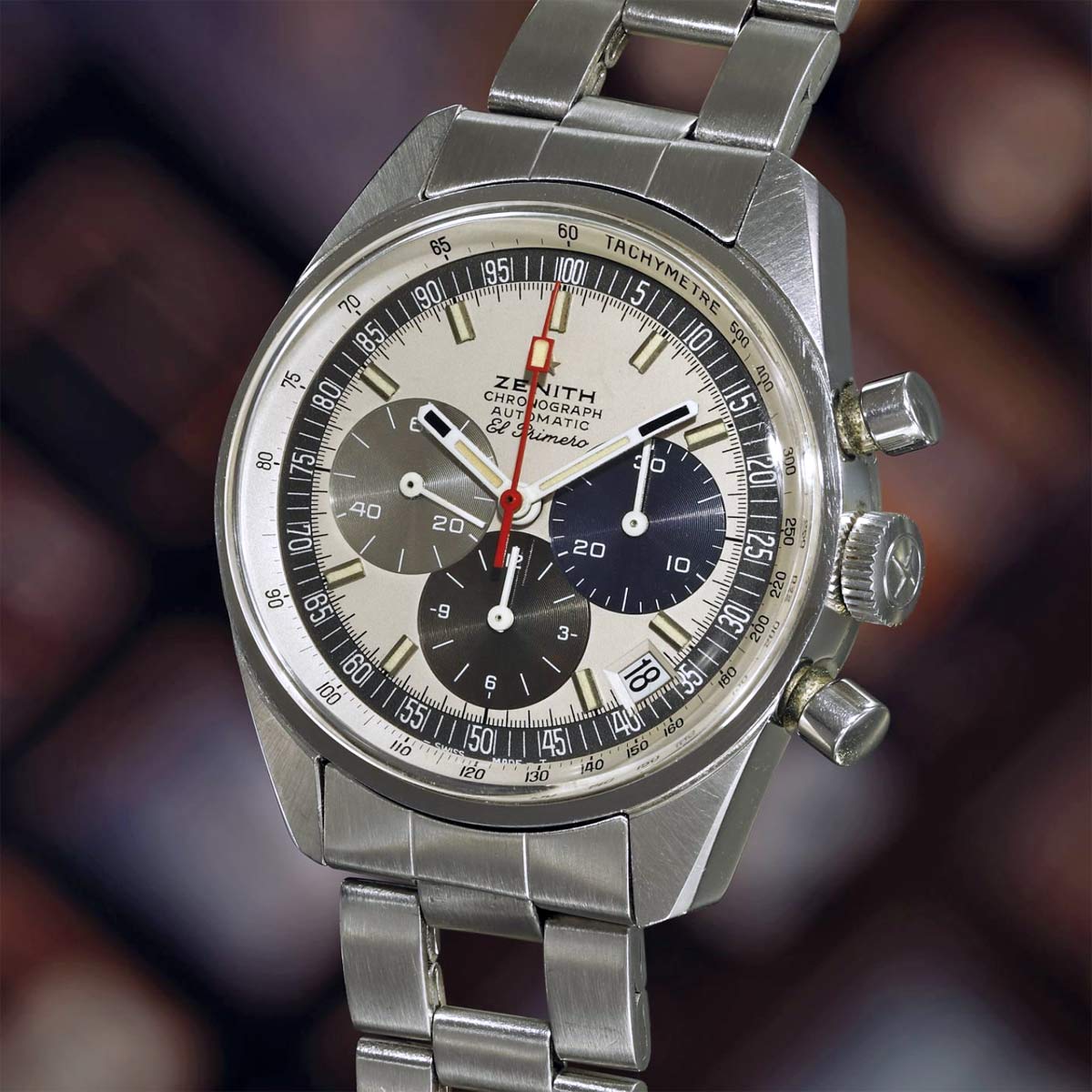
Zenith El Primero ref. A386 (1969), the original tricolor dial. Image: Time and Watches.
While Rolex was struggling to sell hand-wound Daytonas, a race of a different kind was being run in 1969 — the race to build the world's first automatic chronograph. Three contenders crossed the line that year, but Zenith fired first in January with a movement so confident in its priority that the company named it in Spanish: El Primero, "The First."
It was not just automatic. The Calibre 3019 PHC was a fully integrated, column-wheel chronograph beating at 36,000 vibrations per hour (5 Hz) — a high frequency that let it measure elapsed time to a tenth of a second and gave it a precision reputation that has never left it. Zenith launched it in three references: the round A386 with its now-legendary grey-and-blue tricolor sub-dials, and the cushion-cased A384 and brown-dialed A385. Only around 2,500 A386s were made, which is why an original today is a five-figure collector's piece.
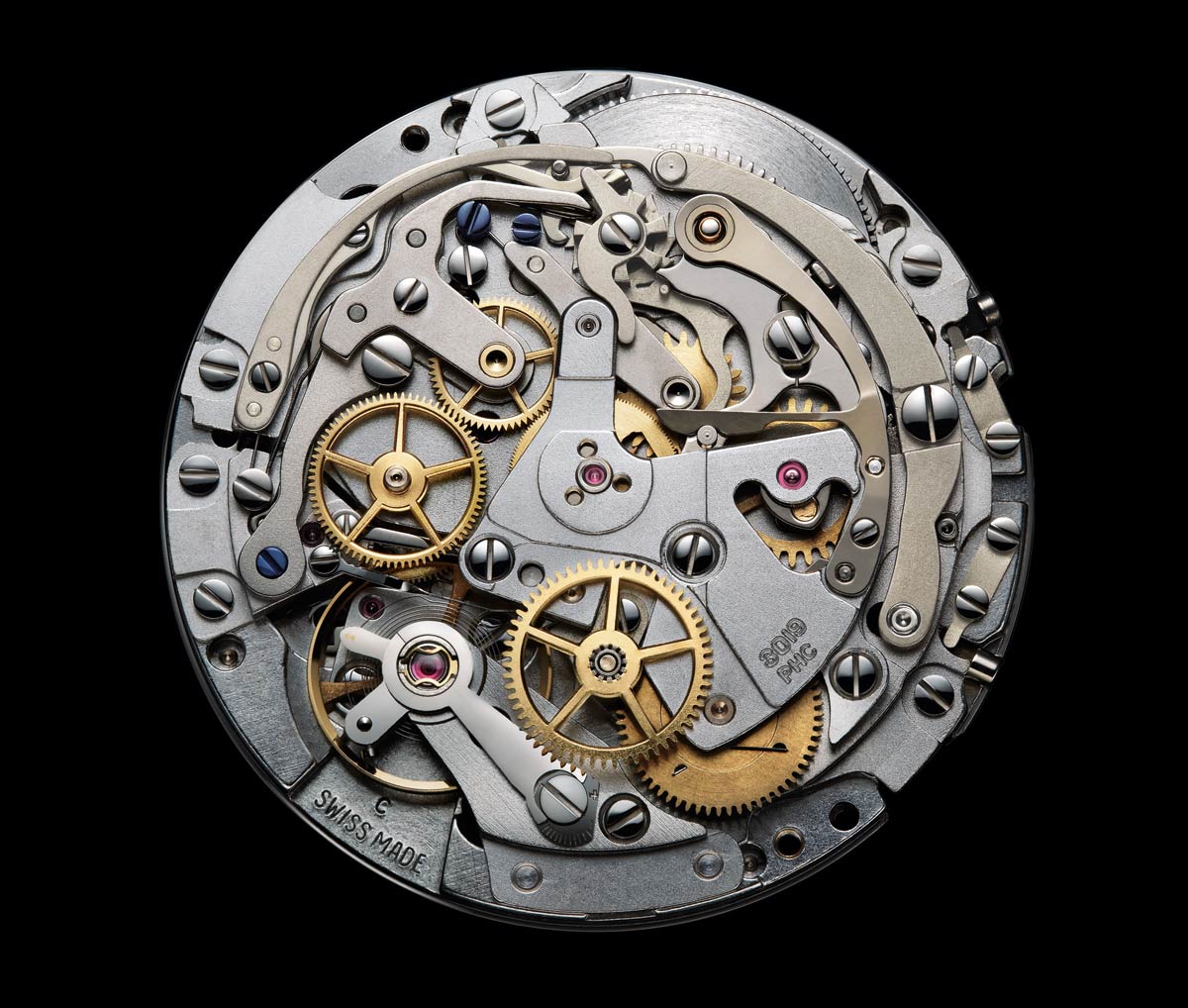
The El Primero Calibre 3019 PHC — high-frequency, automatic, column-wheel. Image: Time and Watches.
The difference between them, in one line: in 1969 the Daytona was a hand-wound tool watch nobody wanted, and the El Primero was the most advanced automatic chronograph movement on the planet. Keep that contrast in mind — it's about to invert.
1970s — The Manual Daytona Hits Its Stride
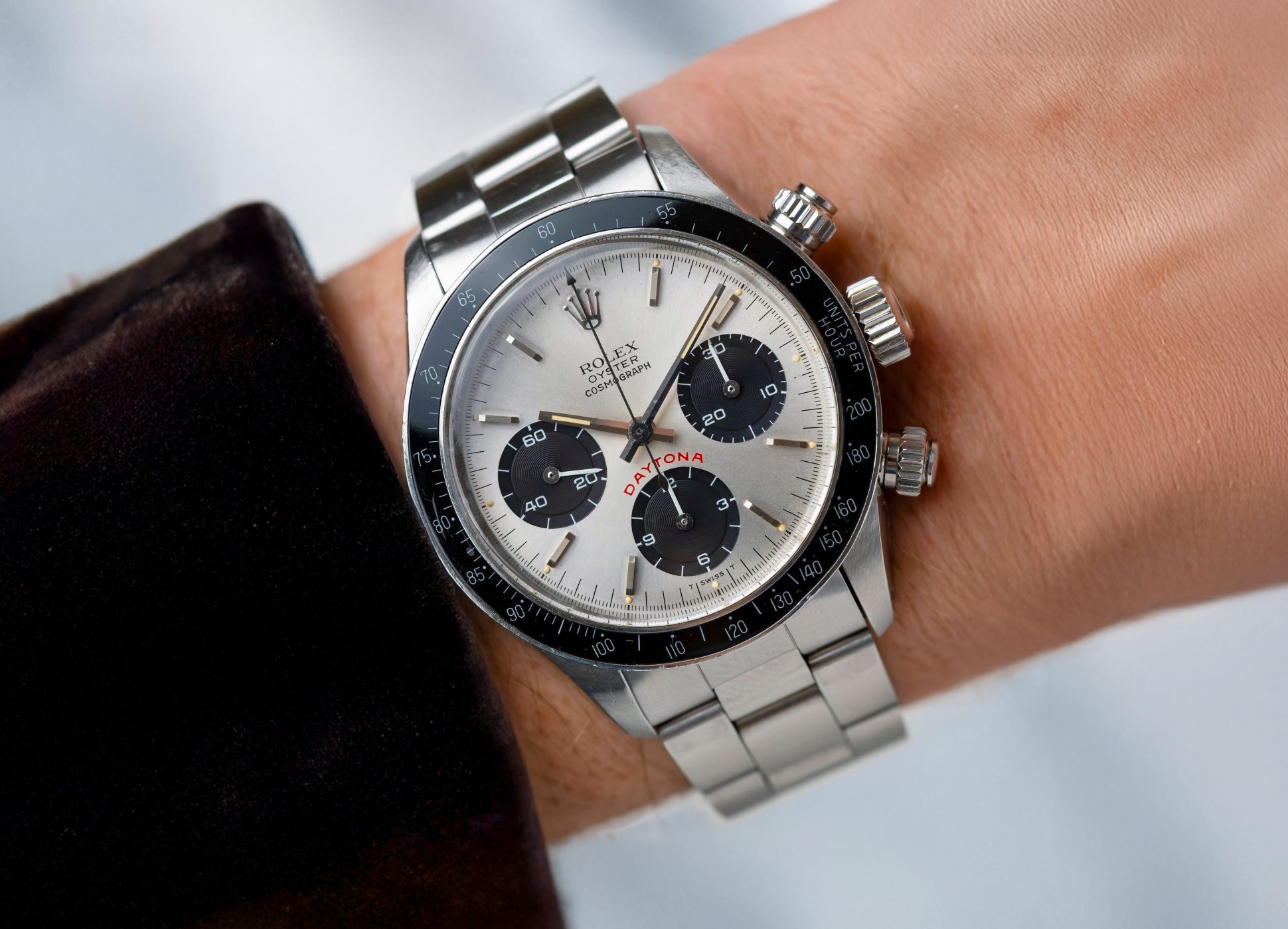
Rolex Daytona ref. 6263 "Big Red," with screw-down pushers and a black acrylic bezel. Image: Monochrome Watches.
Through the 1970s Rolex refined the hand-wound Cosmograph into the shape collectors now think of as the "classic" vintage Daytona. The references 6263 and 6265 added screw-down chronograph pushers (boosting water resistance) and, on the 6263, a black acrylic bezel. The 6263 earned the nickname "Big Red" for the bold red DAYTONA script on its dial.
These were still manual-wind watches built around a Valjoux base — beautifully made, but mechanically a generation behind what Zenith had been producing since 1969. That gap is precisely the problem Rolex would eventually solve by knocking on Zenith's door.
1975 — The Quartz Crisis and the Man Who Hid El Primero
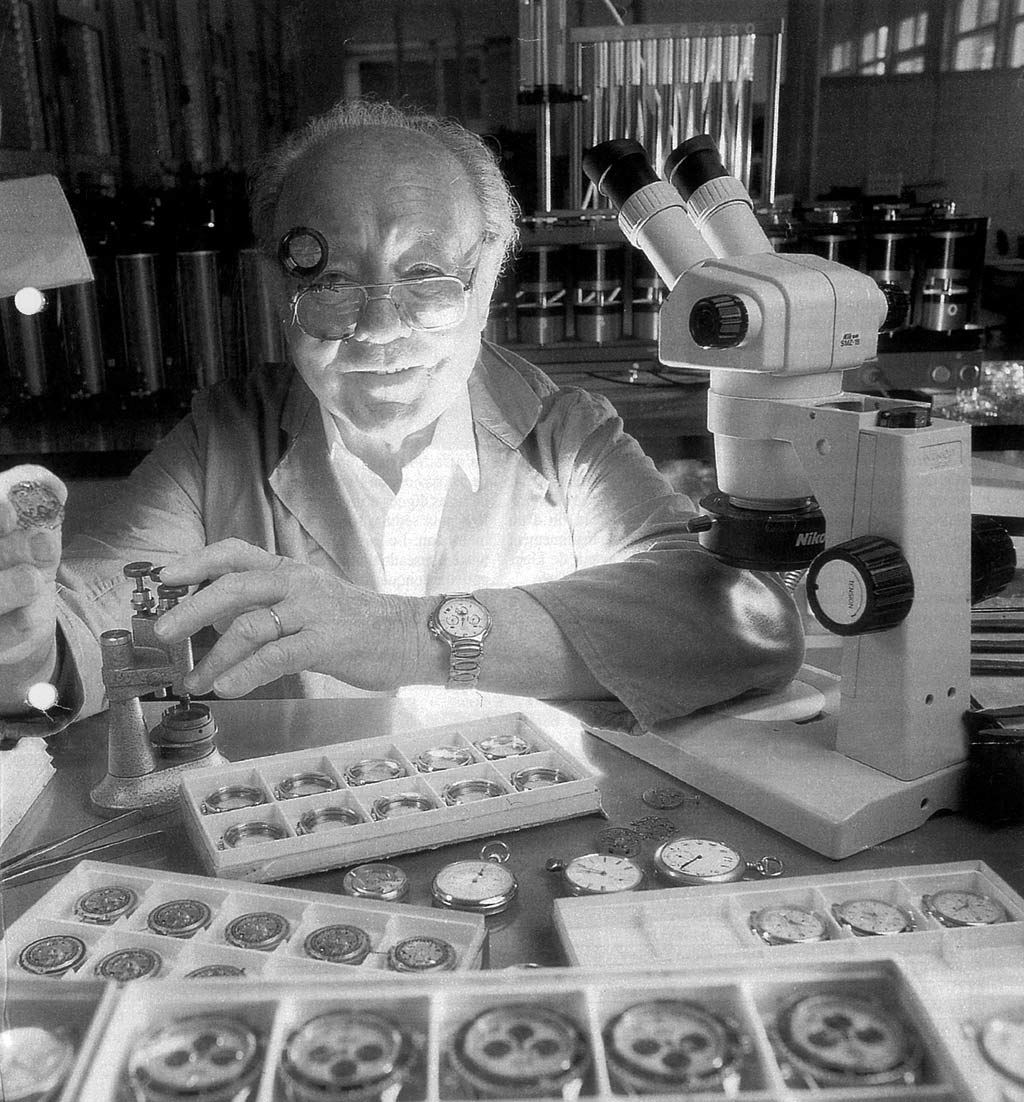
Charles Vermot, the Zenith watchmaker who refused to let El Primero die. Image: Time and Watches.
Then the bottom fell out of mechanical watchmaking. Cheap, accurate quartz watches arrived, and in 1975 Zenith's American owner ordered the manufacture to abandon mechanical movements entirely: stop production, dismantle the assembly lines, scrap the specialist tooling, and destroy the technical drawings for the El Primero.
A watchmaker named Charles Vermot could not accept it. In secret, over roughly six months and with his brother's help, he moved the presses, cams, cutting tools and complete production plans up some 50 steps into a walled-off section of the manufacture's attic — the grenier — and sealed it.
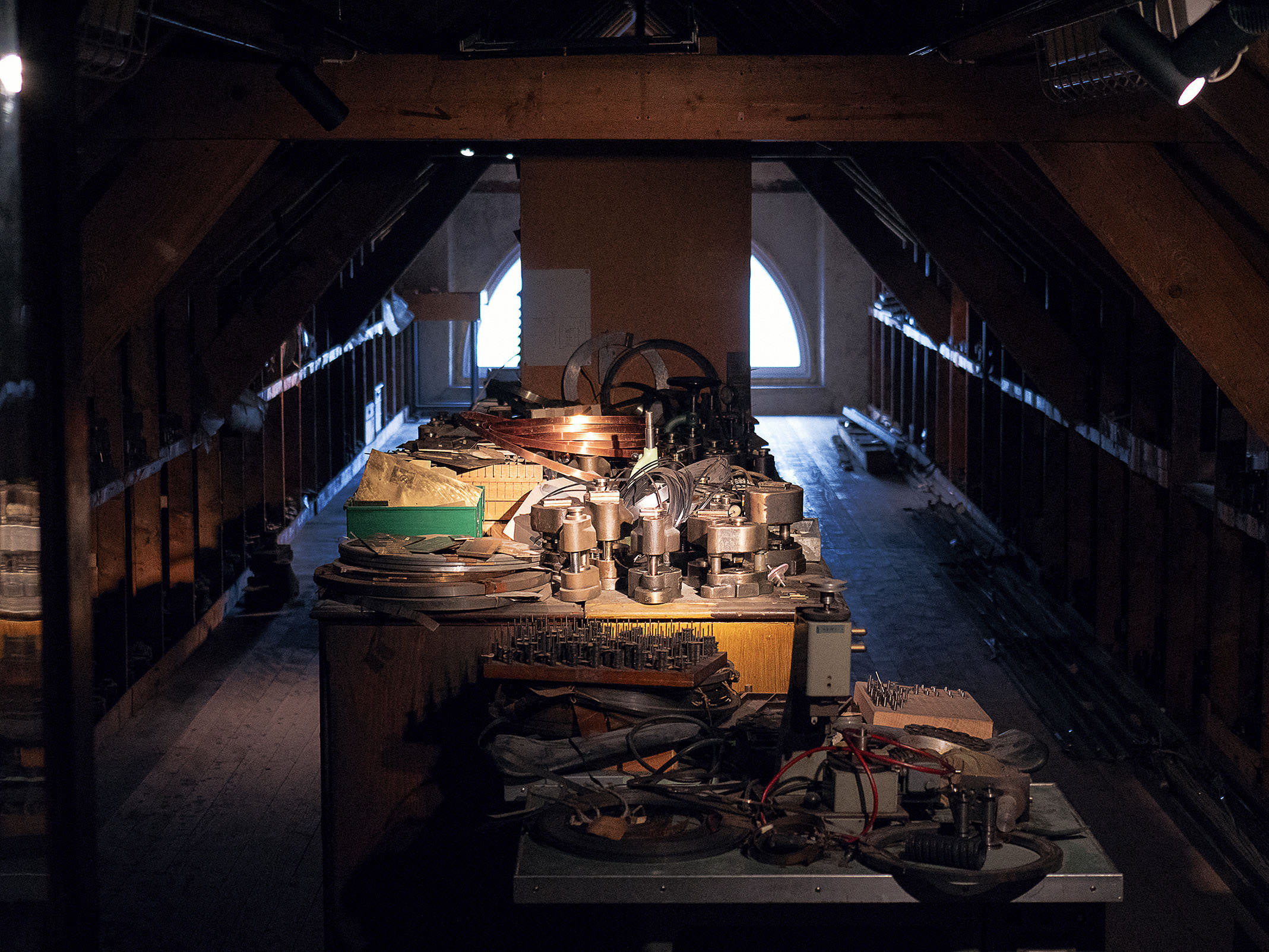
The Zenith attic where Vermot hid the presses and plans, labeled and ready to return to production. Image: Monochrome Watches.
Everything was labeled and stored in the order it would need to go back into production. Without that act of quiet insubordination, the El Primero would simply not have existed in the 1980s — and the most important chapter of this entire timeline could never have happened.
1988 — The Plot Twist: A Zenith Engine Inside the Daytona
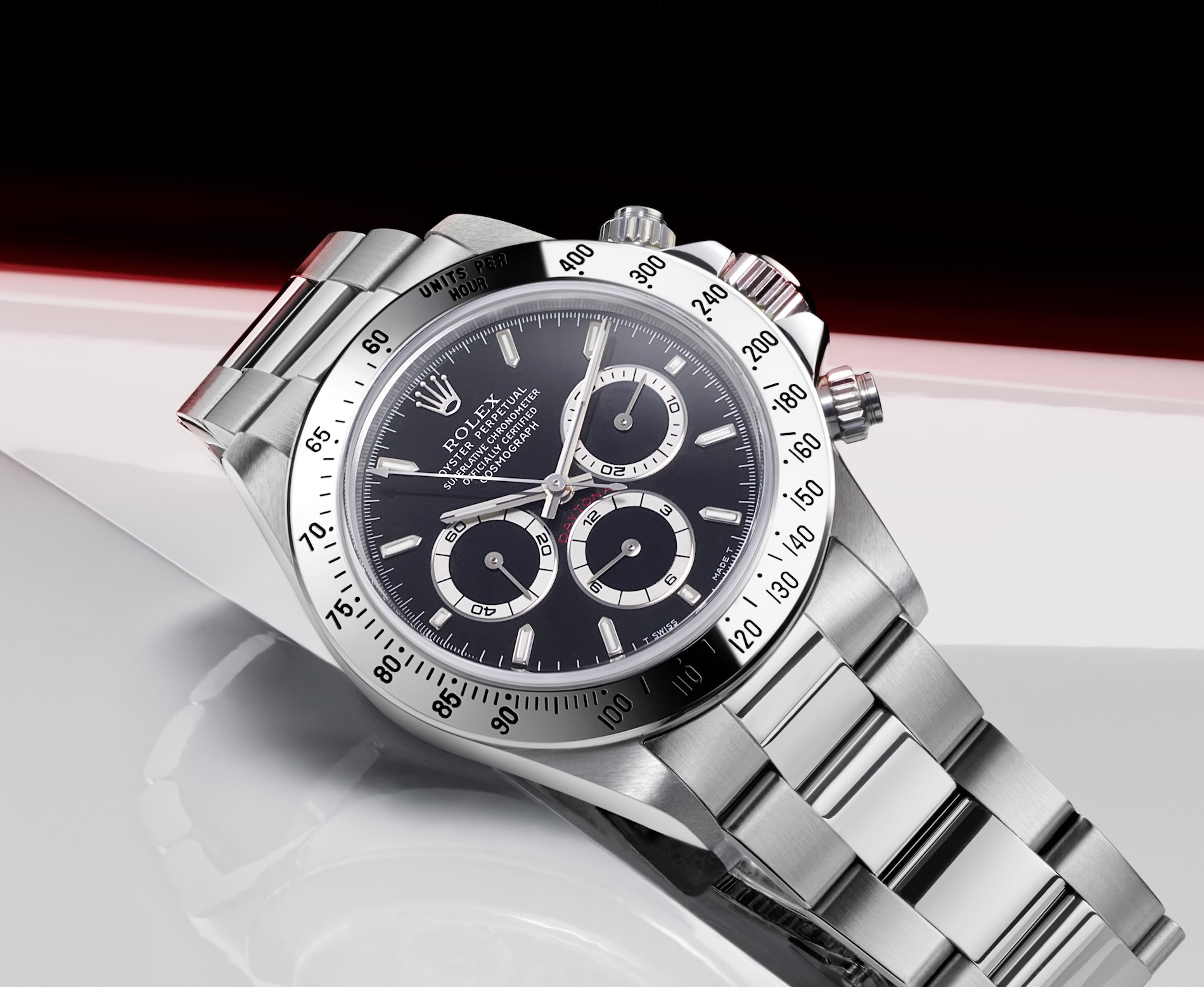
Rolex Cosmograph Daytona ref. 16520 (1988) — automatic at last, thanks to Zenith. Image: Monochrome Watches.
This is the moment the two stories fuse. At Baselworld 1988, Rolex unveiled the reference 16520 — the first automatic Daytona, with a larger 40mm case and a sapphire crystal. Rolex had decided not to develop its own automatic chronograph from scratch. Instead, it went to Zenith and licensed the El Primero — the very movement Charles Vermot had saved.
But Rolex being Rolex, it did not simply drop the caliber in. Engineers put the base movement through more than 200 modifications before signing off on it as the in-house-designated Calibre 4030. They replaced the rotor, lower plate and escapement wheel; fitted a Rolex free-sprung Microstella balance; removed the date; and — crucially — slowed the high-beat 36,000 vph movement down to 28,800 vph for durability and easier servicing, while raising the power reserve from 42 to roughly 50 hours.
The 16520 "Zenith Daytona" ran from 1988 to 2000 and turned the Daytona from a slow seller into the most waitlisted watch in the world. For twelve years, the answer to "what's inside a Daytona?" was, fundamentally, "a Zenith."
2000 — Rolex Goes In-House
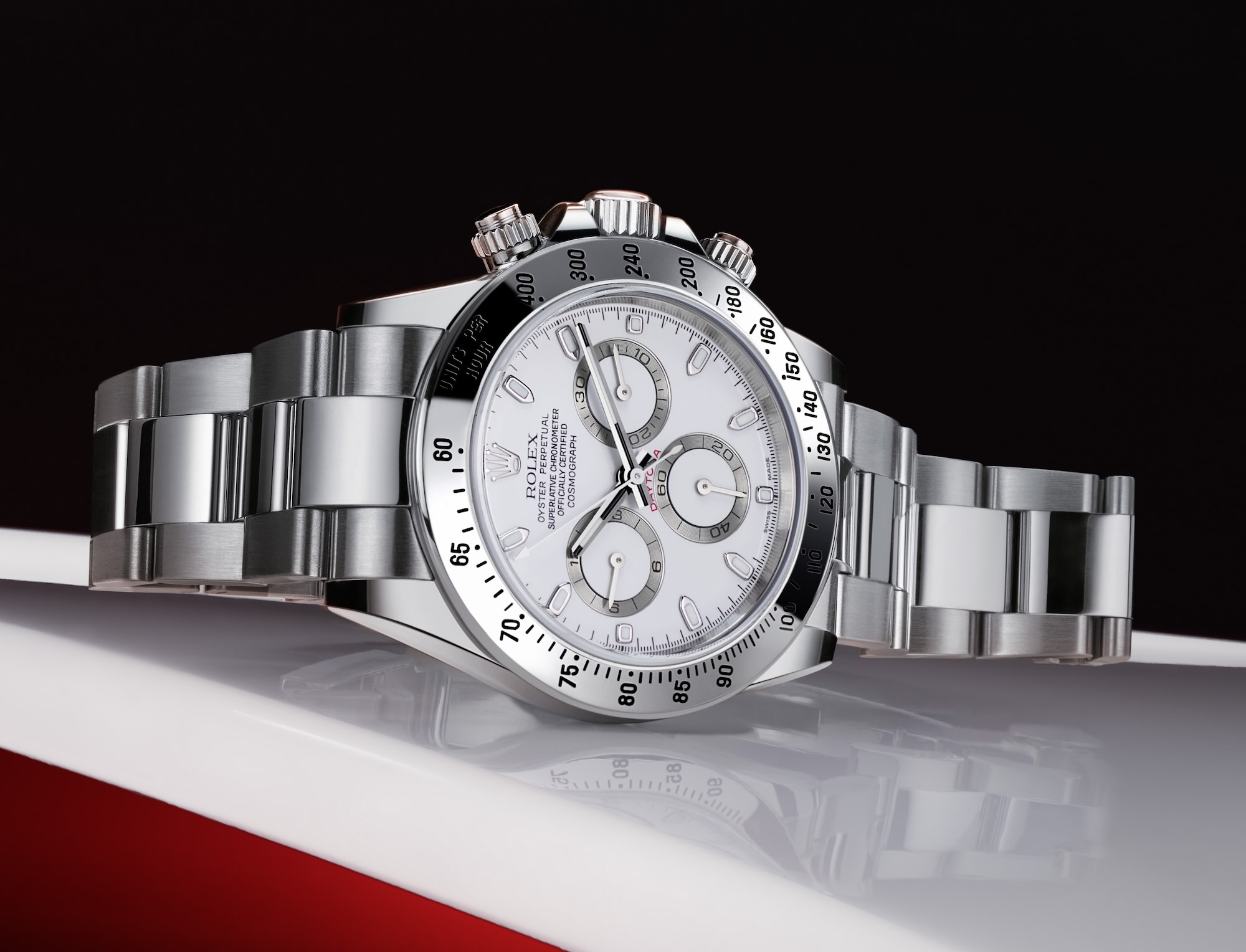
Rolex Cosmograph Daytona ref. 116520 with the in-house Calibre 4130. Image: Monochrome Watches.
In 2000 Rolex finally introduced its own chronograph movement, the Calibre 4130, in the reference 116520. The new caliber had fewer parts, a vertical clutch for a smoother chronograph start, a column wheel, and a 72-hour power reserve. The partnership with Zenith was over; the Daytona was now wholly Rolex, inside and out.
For Zenith, losing the Rolex contract was a blow — but it also forced the manufacture to stand entirely on its own El Primero again. Both brands left the marriage and went on to do their best work alone.
2011–2016 — The Ceramic Era
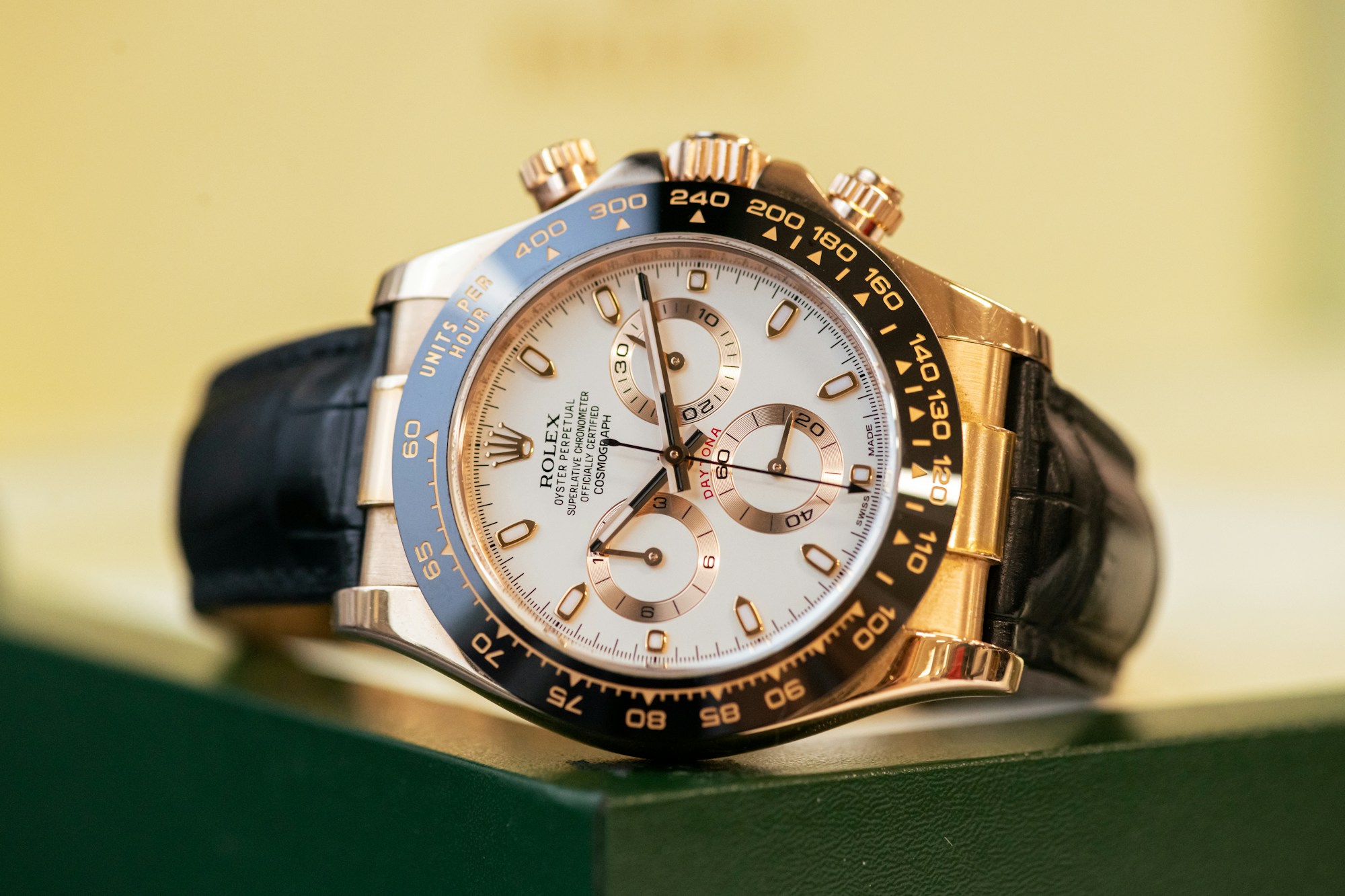
Rolex Daytona ref. 116515LN (2011), the first Cerachrom ceramic-bezel Daytona. Image: Monochrome Watches.
Rolex began swapping the Daytona's metal tachymeter bezel for scratch-proof Cerachrom ceramic, starting with the Everose-gold 116515LN in 2011 and culminating in 2016 with the steel 116500LN — the black-bezel, "panda"-or-black-dial reference that became one of the hardest watches in the world to buy at retail. The ceramic bezel quietly nodded to the black acrylic bezel of the vintage 6263, closing a loop fifty years in the making.
2021 — Zenith Reclaims Its Crown: The Chronomaster
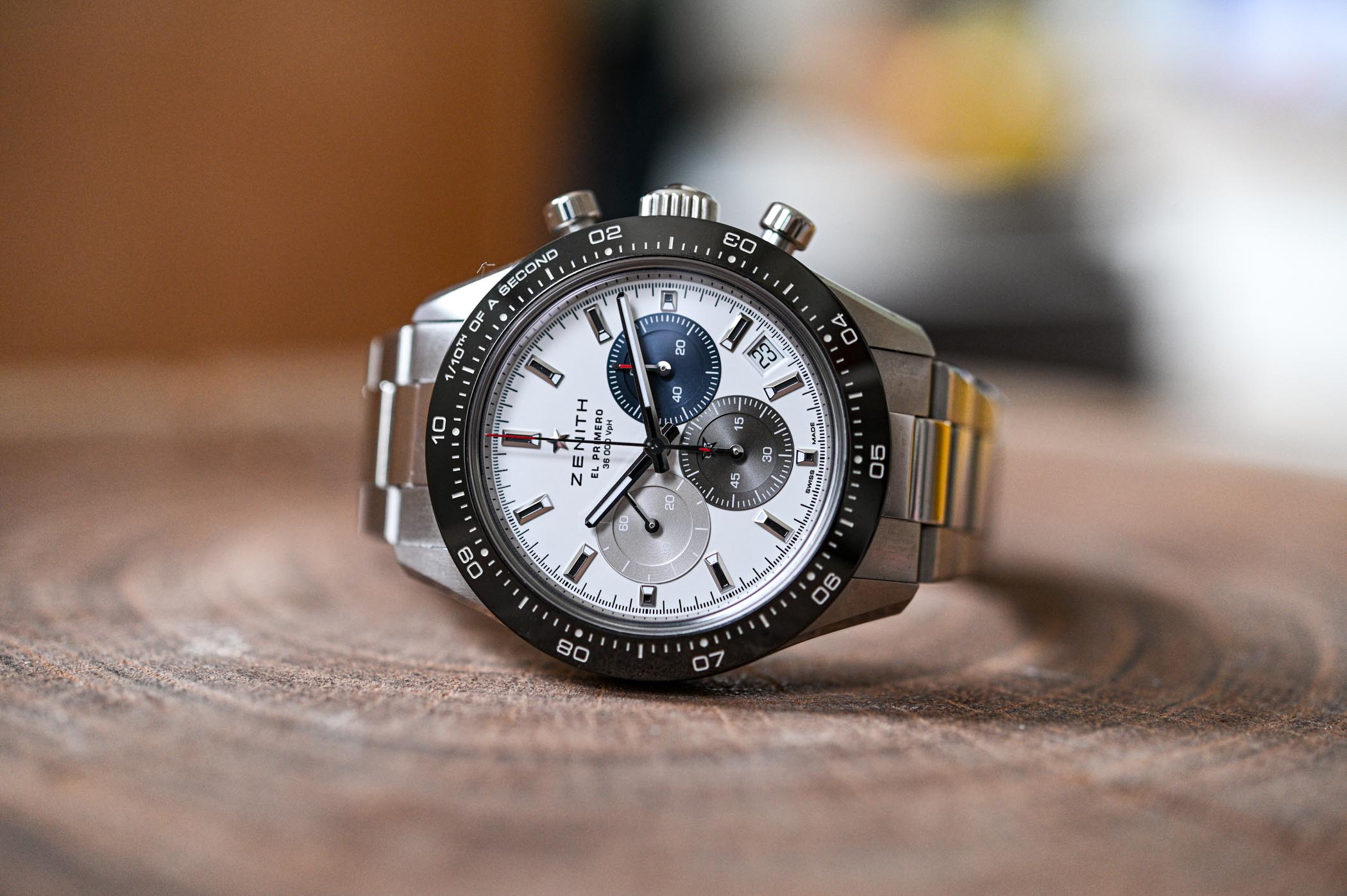
Zenith Chronomaster Sport (2021), El Primero 3600, with a 1/10th-of-a-second ceramic bezel. Image: Monochrome Watches.
For decades the Chronomaster has been the name Zenith gives its flagship El Primero chronographs. In 2021 — marking (with a two-year delay) the El Primero's 50th anniversary — Zenith found its modern stride with two releases that define the line today.
The Chronomaster Sport is the one most often cross-shopped against a steel Daytona. It pairs a 41mm steel case with a black ceramic bezel, but instead of a tachymeter that bezel is graduated for 1/10th of a second — a feat only the high-frequency El Primero can pull off, with a central chronograph hand that sweeps a full lap in ten seconds. Inside is the El Primero 3600, still beating at 36,000 vph, the direct descendant of the 1969 caliber.
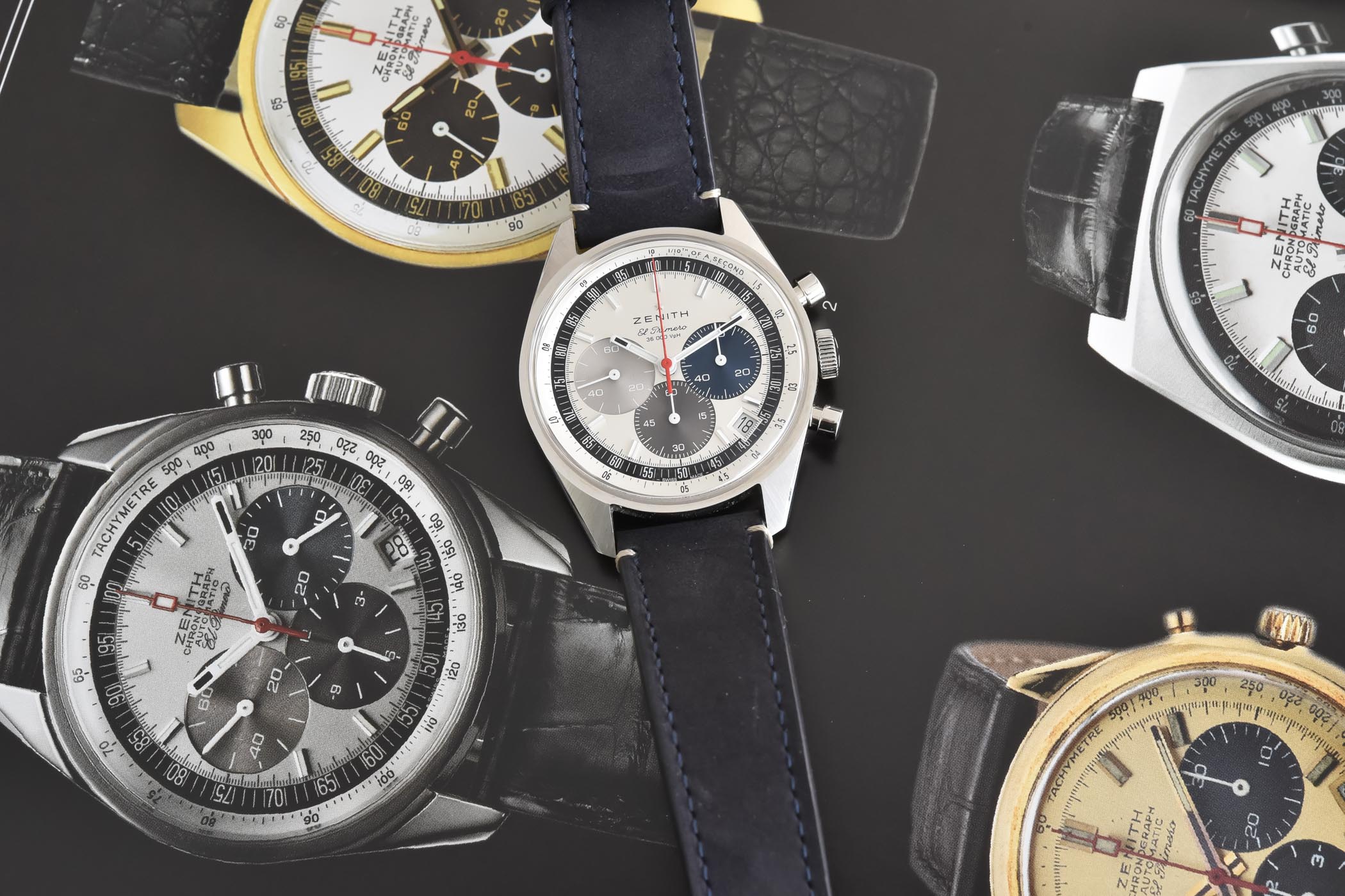
Zenith Chronomaster Original (2021), a 38mm reissue of the 1969 A386. Image: Monochrome Watches.
Alongside it, the Chronomaster Original is the purist's pick: a 38mm reissue that recreates the grey-and-blue tricolor dial of the 1969 A386 almost exactly, powered by the El Primero 3600. Where the Daytona spent the 2010s getting bigger and more precious, Zenith's answer was to go back to the watch that started it all. If you want the look that started this whole story, the Original is it — at a fraction of a Daytona's market price.
2023 — The Daytona's 60th Anniversary
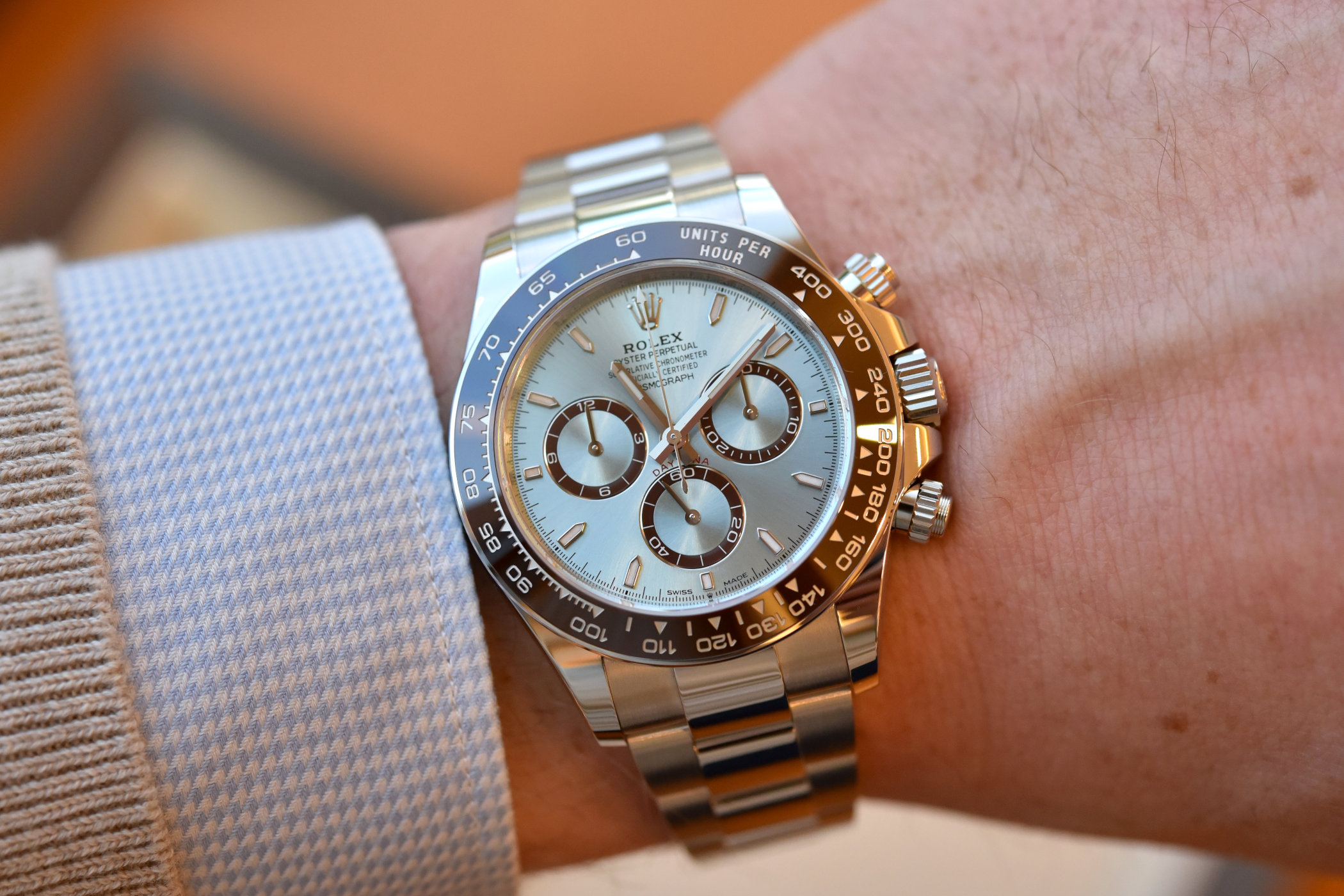
Rolex Daytona ref. 126506 in platinum, ice-blue dial and chestnut-brown Cerachrom bezel. Image: Monochrome Watches.
For the Daytona's 60th, Rolex updated the entire line with the Calibre 4131 (72-hour reserve, Chronergy escapement, skeletonized rotor) and subtly redesigned the case, lugs and sub-dials. The steel 126500LN — the white-or-black "panda" at the top of this page — is the new everyday reference. At the very top of the range sits the platinum 126506, with its signature ice-blue dial, chestnut-brown bezel, and a first for a modern Rolex: an exhibition caseback that finally lets you see the movement.
The Daytona "Le Mans" — ref. 126529LN
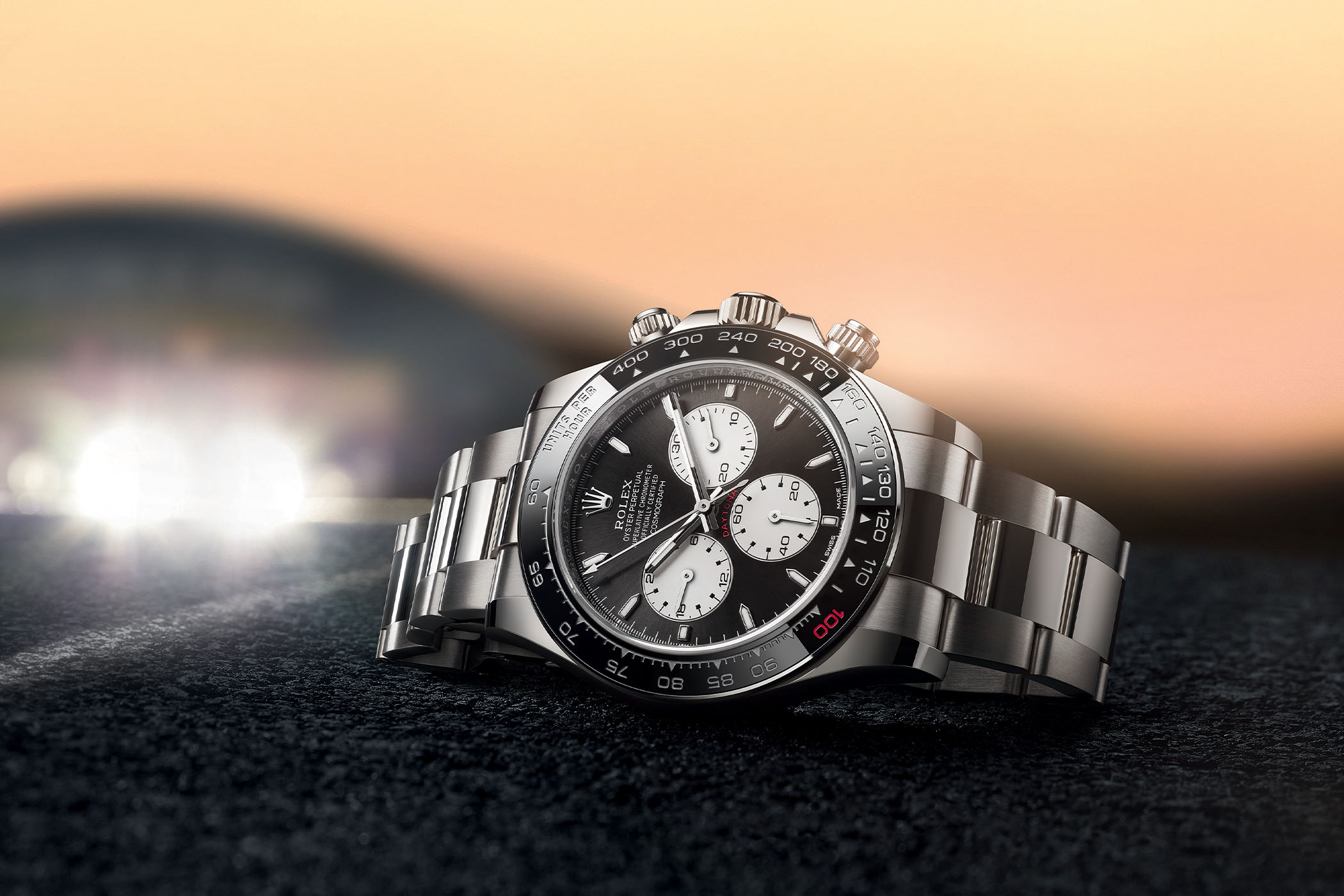
Rolex Daytona "Le Mans" ref. 126529LN, white gold, celebrating the 100th running of the 24 Hours of Le Mans. Image: Monochrome Watches.
The headline release of 2023 was the white-gold 126529LN "Le Mans," built to mark the 100th running of the 24 Hours of Le Mans. It revives the reverse-panda "Paul Newman" dial look — black dial, cream sub-dials, red "Daytona" — and runs a unique Calibre 4132 whose chronograph counter is reconfigured to time events up to 24 hours, a direct nod to endurance racing. A red "100" replaces the usual sub-dial graphics. It instantly became one of the most coveted modern Daytonas ever made.
The Special Daytonas You Can Get Today
Beyond the steel panda and the platinum, Rolex's current Daytona catalogue (and its off-catalogue gem-set pieces) spans a remarkable range:
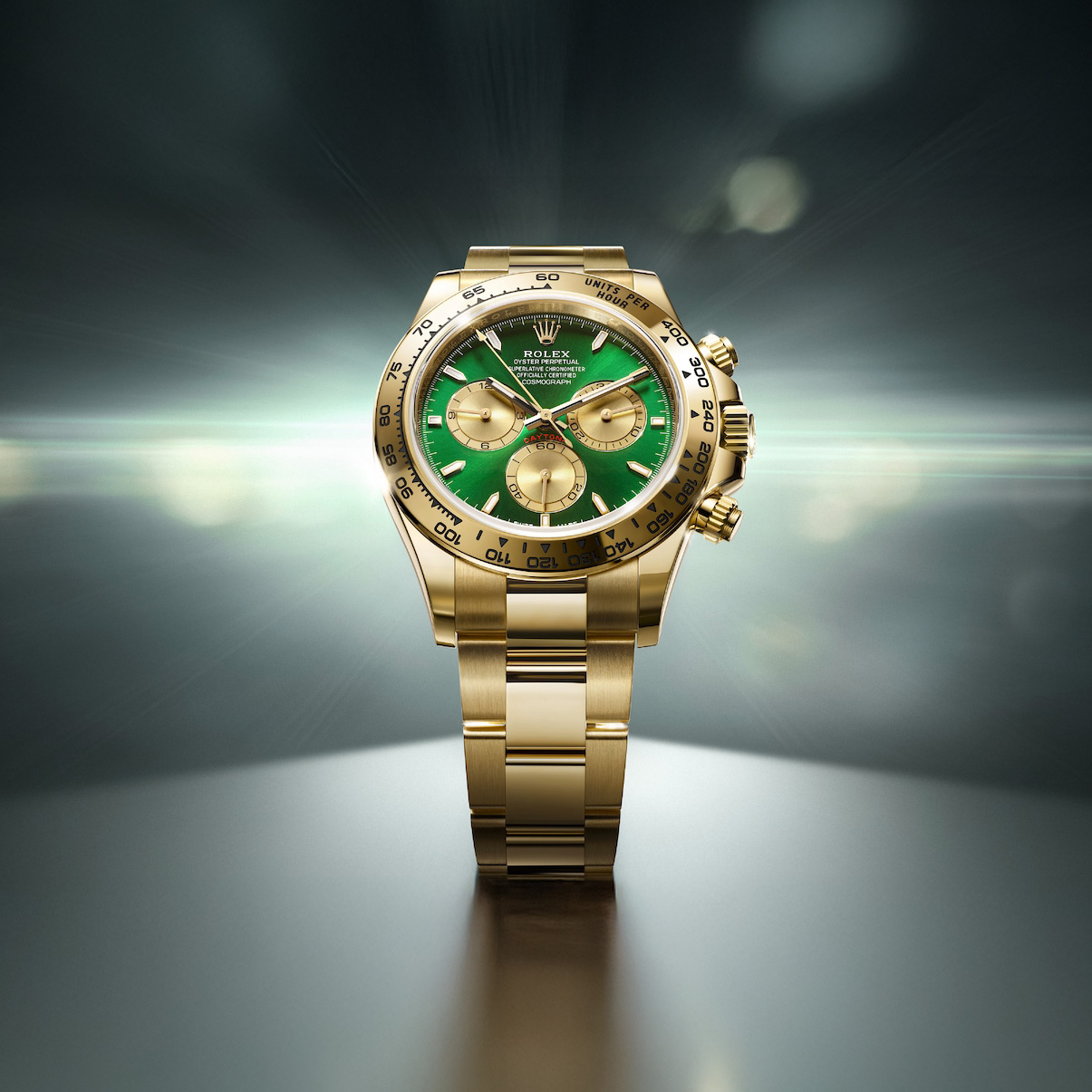
Rolex Daytona ref. 126508 in yellow gold with a green lacquer dial, nicknamed the "John Mayer." Image: Monochrome Watches.
- Steel "Panda" / Black — 126500LN: the reference everyone wants, white or black dial, Calibre 4131.
- Platinum — 126506: ice-blue dial, chestnut Cerachrom bezel, exhibition caseback. Also offered with baguette-diamond markers (126506A).
- "Le Mans" — 126529LN: white gold, 24-hour reverse-panda Paul Newman dial, Calibre 4132.
- Yellow gold "John Mayer" — 126508: a vivid green lacquer dial that became an instant nickname-piece.
- Meteorite dials — e.g. 126519LN: gold cases with a genuine meteorite dial and crystallized sub-dials, no two alike.
- Turquoise / Alcaraz — 126518LN: yellow gold with a striking turquoise lacquer dial.
- Rainbow & gem-set: off-catalogue showpieces with a bezel of 36 graduated sapphires, in yellow, white or Everose gold — among the most expensive Daytonas ever produced.
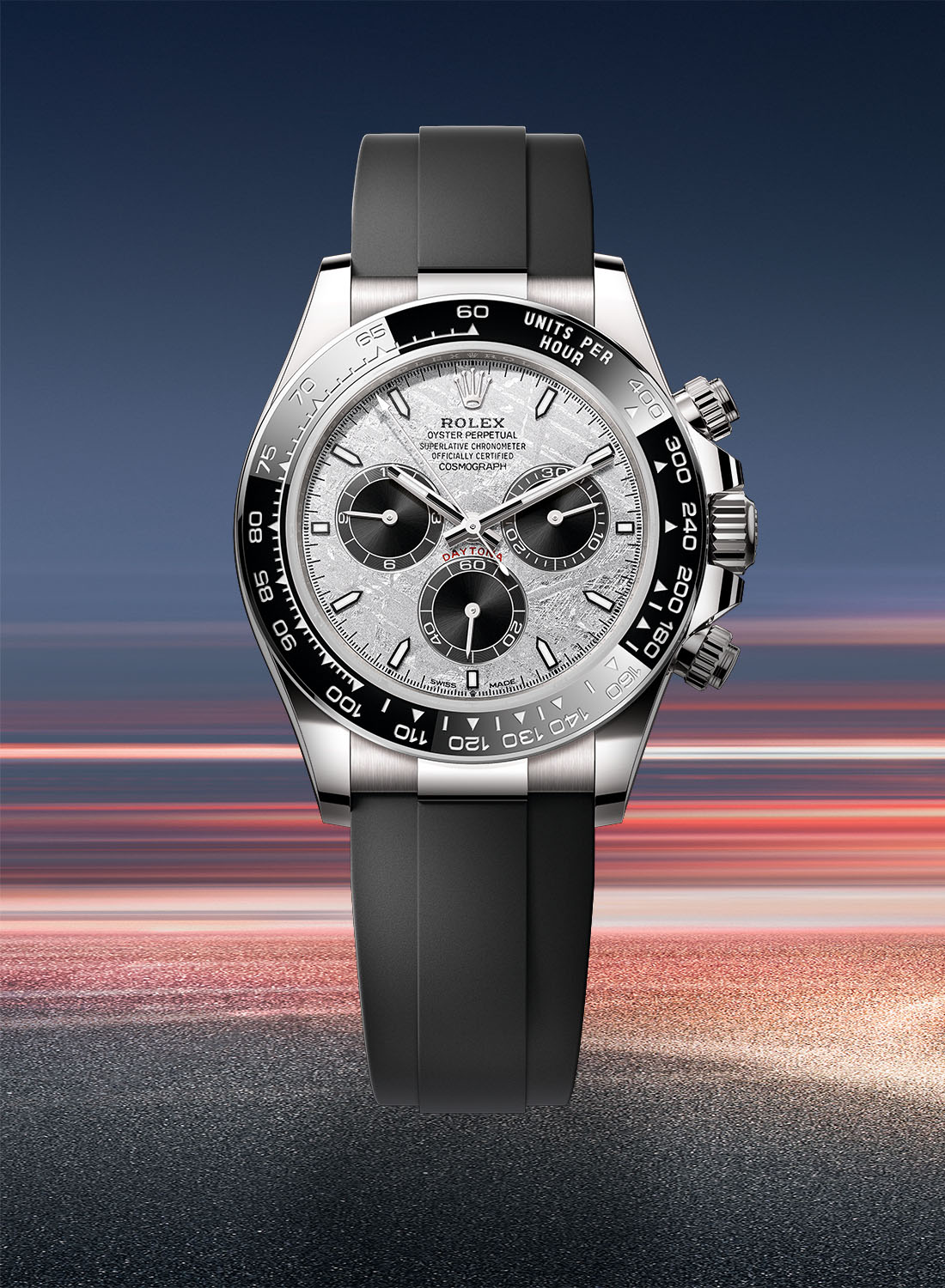
Rolex Daytona ref. 126519LN, meteorite dial in white gold. Image: Monochrome Watches.
Side by Side: How to Choose
| Rolex Daytona (126500LN) | Zenith Chronomaster Sport | |
|---|---|---|
| Born | 1963 | El Primero, 1969 |
| Movement | In-house Calibre 4131, 28,800 vph | El Primero 3600, 36,000 vph |
| Signature trick | Tachymeter, ceramic bezel, vertical-clutch chrono | 1/10th-second bezel, central 10-sec hand |
| Case | 40mm steel | 41mm steel |
| Retail vs. reality | Retail ~$15.7k, market well above | Retail ~$10–11k, available |
| The vibe | The icon you wait years to buy | The connoisseur's high-frequency original |
If you want the watch the whole world recognizes — and you're prepared to wait, or pay a premium — it's the Daytona. If you want the movement that actually came first, finished beautifully, with the historical tricolor dial and the ability to walk into a boutique and buy it, the Zenith is one of the smartest buys in luxury watchmaking. And if you appreciate the irony that for twelve years they were, mechanically, the same watch — well, now you know the whole timeline.
The Bottom Line
The Daytona and the El Primero spent the 1960s as opposites: a tool watch nobody wanted and the most advanced chronograph movement ever built. The quartz crisis nearly killed both, and one stubborn watchmaker's attic saved the engine that would, in 1988, finally make the Daytona automatic. They parted ways in 2000 and have each spent the last quarter-century doing their finest work — Rolex turning the Daytona into the ultimate grail, Zenith reclaiming the El Primero as its own crown jewel in the Chronomaster.
Two watches, sixty years, one shared heartbeat. Few rivalries in watchmaking are this entangled — and that's exactly what makes choosing between them so much fun.
Want to see how a Daytona-style or El Primero-style chronograph actually sits on your wrist before you commit? Try it on virtually with TryAnyWatch.